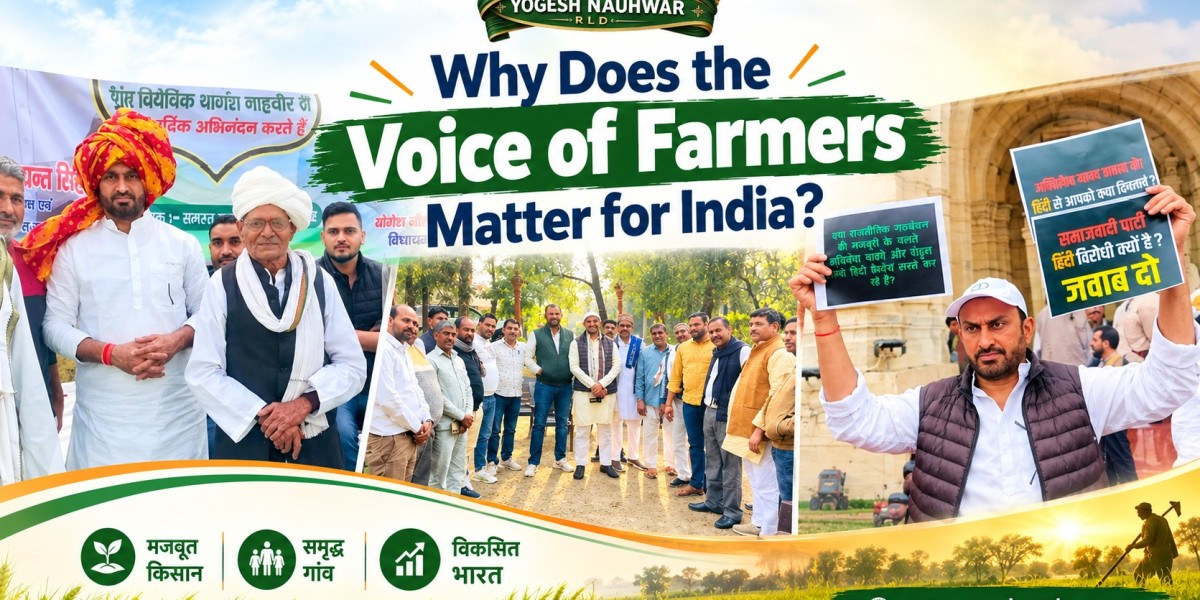

Farmers are an important part of India’s economy and rural life. From producing food to supporting village economies, their work affects millions of people every day. But farming is not only about growing crops. Farmers also face challenges related to weather, irrigation, markets, prices, roads, storage, loans, and access to modern technology.
This is why the Voice of Farmers matters. Listening to farmers helps policymakers, public representatives, and communities understand real problems at the ground level. When farmers are heard and their concerns are addressed, rural development becomes more practical, inclusive, and sustainable.
What Does the Voice of Farmers Mean?
The Voice of Farmers refers to the opinions, needs, experiences, and concerns shared by people involved in agriculture. It gives decision-makers a better understanding of what is happening in villages and farming communities.
Farmers may raise concerns about:
- Crop prices and market access
- Irrigation and availability of water
- Roads and rural infrastructure
- Electricity and agricultural facilities
- Crop losses caused by weather
- Access to agricultural information and technology
- Storage and transportation facilities
- Employment and opportunities for rural youth
Listening to these concerns is an important part of responsible public service.
Why Is the Voice of Farmers Important for India?
India has a large rural population, and agriculture remains closely connected with food security, employment, and village economies. Strong rural communities can contribute significantly to the country's overall progress.
The Voice of Farmers matters because it can help identify problems before they become larger challenges. For example, a farmer experiencing difficulties with irrigation can provide valuable information about local water needs that may not be visible from a policy document alone.
Farmer feedback can help improve:
- Agricultural policies – Local experiences can help make policies more practical.
- Rural infrastructure – Farmers can highlight gaps in roads, irrigation, storage, and transportation.
- Market opportunities – Understanding market difficulties can support better access to buyers.
- Technology adoption – Farmers can explain which technologies are useful and which barriers prevent adoption.
- Community development – Local participation can make development projects more relevant to village needs.
How Can Listening to Farmers Strengthen Rural Development?
Rural development is most effective when the people affected by development decisions have an opportunity to share their views. Farmers understand their land, crops, local weather patterns, water availability, and village-level challenges through direct experience.
Regular interaction between farmers and public representatives can create a stronger connection between policy and reality.
A farmer-focused approach can include:
- Listening to concerns through local meetings
- Understanding village-level infrastructure needs
- Supporting awareness about government schemes
- Encouraging better agricultural practices
- Promoting opportunities for rural youth
- Improving communication between communities and authorities
Such efforts can help build trust and encourage greater public participation.
Voice of Farmers in Mant Mathura
The importance of farmers can also be understood at the local level. In agricultural communities, issues such as irrigation, roads, crop markets, transportation, and rural facilities can directly influence everyday life.
The Voice of Farmers in Mant Mathura represents the importance of understanding these local concerns and giving farmers a meaningful platform to express their needs. Local leadership can play a constructive role by listening to people, understanding their priorities, and supporting development-oriented discussions.
For a region like Mant in Mathura district, connecting development efforts with the practical experiences of farming communities can help create more people-focused rural progress.
The Role of Public Leaders in Supporting Farmers
Public leaders have an important responsibility to listen to citizens and understand their concerns. Effective leadership is not only about making decisions; it is also about creating opportunities for people to be heard.
A Yogesh Nauhwar public leader approach to community engagement can be viewed around principles such as listening, accessibility, accountability, and development-focused action.
A responsible public representative should:
- Listen to farmers without ignoring local concerns
- Understand issues at the grassroots level
- Encourage constructive dialogue
- Raise relevant public issues through appropriate channels
- Support development initiatives
- Keep community welfare at the center of public service
The goal should be to connect people's everyday experiences with meaningful development efforts.
Why Farmer Participation Matters for India’s Future
India’s future growth depends not only on cities and industries but also on strong villages and sustainable agriculture. Farmers need opportunities to participate in discussions that affect their livelihoods and communities.
When farmers are heard, development can become more responsive. When their experiences are considered, policies can better reflect ground realities. And when rural communities participate actively, they can become partners in development rather than simply recipients of government programmes.
This approach can also benefit younger generations. Better rural infrastructure, education, technology, connectivity, and employment opportunities can encourage young people to see new possibilities within their communities.
Building a Stronger Connection Between Farmers and Leadership
The Voice of Farmers is ultimately about communication and trust. Farmers should have opportunities to express their concerns, while leaders and institutions should make genuine efforts to understand and respond to them.
A stronger connection can be built through:
- Regular community interaction
- Transparent communication
- Awareness programmes
- Farmer-focused development discussions
- Better access to information
- Continued attention to local priorities
These steps may seem simple, but consistent communication can make a meaningful difference.
Conclusion
The Voice of Farmers matters for India because farmers are closely connected to the country's food security, rural economy, and community development. Their experiences provide valuable insights into the challenges and opportunities present in rural areas.
Listening to farmers is not simply about hearing their problems. It is about understanding their experiences and using that understanding to encourage better development, stronger communities, and more responsive public service.
Whether at the national level or through initiatives connected with the Voice of Farmers in Mant Mathura, giving farmers a meaningful voice can help create a more inclusive path toward India's future.