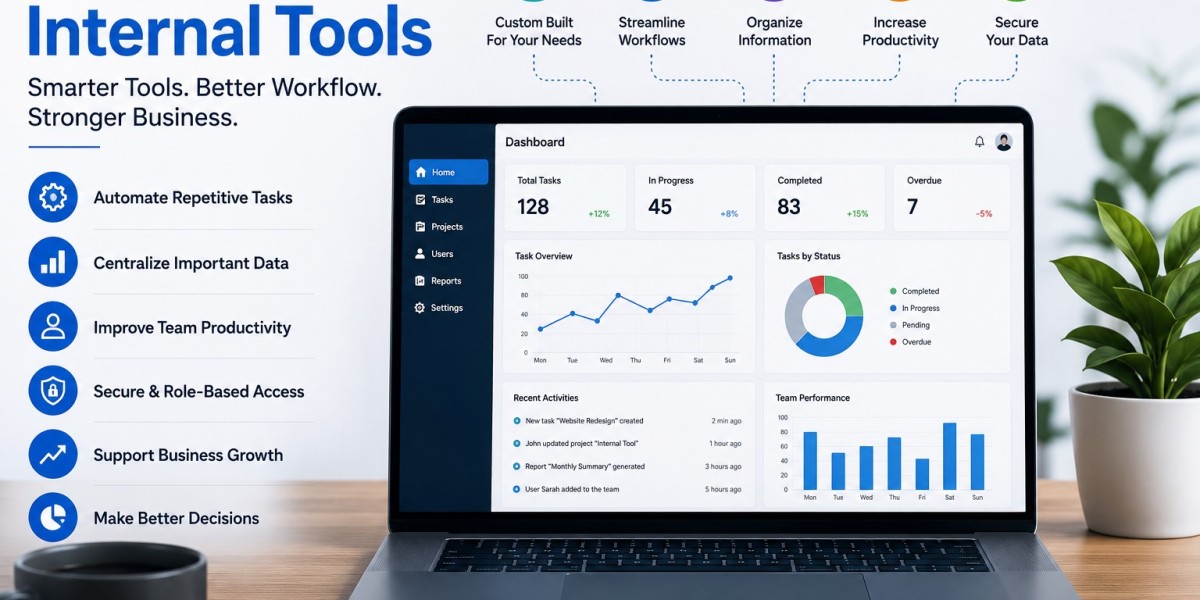

Modern businesses rely heavily on technology to manage daily operations, organize information, and serve customers efficiently. While many companies use ready-made software, these solutions do not always match the specific requirements of a business. This is where Custom Internal Tools can provide a practical solution.
Custom-built internal tools are designed around a company's own workflows and processes. Instead of forcing employees to adapt to generic software, businesses can create systems that fit the way their teams actually work.
What Are Custom Internal Tools?
Custom internal tools are software applications developed specifically for use within an organization. They can be simple dashboards, automated workflows, data management systems, reporting platforms, or more advanced business applications.
For example, a company may need a tool to track employee tasks, manage inventory, monitor customer requests, or generate regular reports. Rather than using several unrelated applications, an organization can develop one solution that brings important functions together.
These tools are usually created with the company's goals, workflow, and operational requirements in mind. This makes them different from standard software products designed for a broad audience.
Improving Everyday Business Operations
One of the biggest advantages of internal business software is improved efficiency. Employees often spend a significant amount of time performing repetitive tasks, entering information into different systems, or searching for important data.
A well-designed internal tool can bring these processes into one place. Employees can access the information they need quickly and complete tasks with fewer unnecessary steps.
For instance, a sales team could use an internal dashboard to track leads, follow up with customers, and monitor sales activity. A management team could use the same system to view performance reports without waiting for information to be collected manually.
Automating Repetitive Tasks
Repetitive work can consume valuable employee time. Tasks such as copying information between spreadsheets, preparing reports, sending notifications, and updating records can often be automated.
Internal tools can help businesses reduce this manual workload. Automation allows employees to spend more time on activities that require decision-making, communication, creativity, and problem-solving.
Automation can also reduce the possibility of human errors. When information is entered or processed manually several times, mistakes can easily occur. A properly designed system can standardize these processes and make everyday operations more consistent.
Better Data Management
Businesses generate large amounts of information every day. Managing this information effectively is important for both daily operations and long-term decision-making.
Custom internal systems can organize business data according to specific company requirements. Instead of keeping information across multiple spreadsheets, emails, and separate applications, teams can have a centralized system.
Better organization makes it easier to search for records, update information, generate reports, and identify useful trends. Managers can also use accurate information to make more informed business decisions.
Increasing Employee Productivity
Employees work more efficiently when they have simple and reliable tools. Complicated software with unnecessary features can sometimes slow down productivity.
A custom solution can focus only on the functions employees actually need. This creates a cleaner workflow and reduces the time required to learn and navigate the system.
For growing businesses, this can be especially useful. As teams become larger and operations become more complex, having a centralized internal platform can help employees remain organized.
Supporting Business Growth
A business's needs can change as it grows. A process that works for a small team may become difficult to manage when the company expands.
Internal tools can be developed with future growth in mind. New features, users, workflows, and integrations can be added as requirements change.
This flexibility allows businesses to improve their systems gradually rather than replacing their entire technology setup whenever their operations evolve.
Connecting Different Business Processes
Many organizations use multiple software applications for different departments. Sales may use one platform, finance another, while operations rely on spreadsheets or separate databases.
When these systems do not communicate effectively, employees may have to move information manually between platforms.
Custom internal solutions can help connect different business processes and create a more unified workflow. Integrations can allow relevant information to move between systems automatically, reducing duplicate data entry and improving consistency.
Improving Decision-Making
Access to accurate and timely information is essential for effective management. Internal dashboards and reporting tools can provide managers with a clear view of important business activities.
For example, a company could create dashboards showing sales performance, inventory levels, employee productivity, customer requests, or operational costs.
Having this information available in one place can help decision-makers identify problems earlier and respond more quickly to changes.
Security and Access Control
Business information can include sensitive operational and customer data. Internal software can be designed with appropriate access controls so employees only see the information relevant to their responsibilities.
Different users can have different permissions based on their roles. This can help organizations maintain better control over important information while supporting secure collaboration between departments.
Security requirements should always be considered during the planning and development of an internal business application.
Choosing the Right Approach
Before creating an internal tool, businesses should clearly identify the problem they want to solve. Building software simply because it is possible does not guarantee better results.
Companies should first examine their existing workflows and identify repetitive tasks, bottlenecks, communication problems, and areas where employees regularly lose time.
The most effective internal tools usually solve specific business problems rather than trying to include every possible feature. Starting with the most important requirements can make development more manageable and provide useful results sooner.
Conclusion
Technology can play an important role in improving business efficiency, but standard software is not always the perfect fit for every organization. Custom Internal Tools allow businesses to create solutions around their own processes, requirements, and goals.
From automating repetitive tasks and organizing data to improving productivity and supporting business growth, these tools can provide significant operational benefits. With thoughtful planning and the right development approach, an internal business application can become a valuable part of a company's long-term technology strategy.