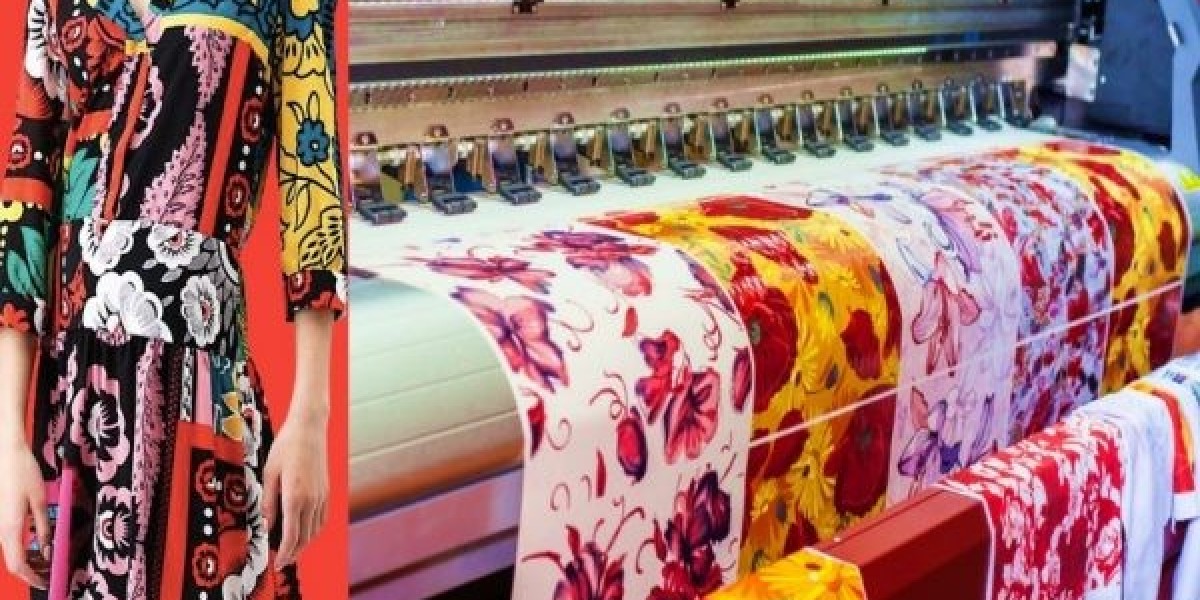

Digital printing on fabric is a modern method of decorating textiles by transferring digital artwork directly onto a suitable fabric with specialized inkjet equipment. The process allows manufacturers to print detailed patterns, photographs, illustrations, logos, gradients, and custom artwork without creating physical screens or printing blocks. Because the design is prepared digitally, changes can be made quickly before or during production.
The growing use of Digital printing on fabric has given textile manufacturers and designers more control over short runs, sampling, customization, and complex artwork. It is used for clothing, sportswear, home furnishings, flags, banners, accessories, and many other textile products. However, achieving a good result requires more than sending an image to a printer. Fabric type, ink chemistry, pretreatment, color management, fixation, and finishing all have an important role.
What Is Digital Printing on Fabric?
Digital textile printing is an inkjet-based process in which computer-controlled print heads deposit small droplets of ink onto fabric. The printer interprets the digital artwork and determines where and how much ink should be applied.
Traditional textile printing methods often require physical screens, rollers, or engraved surfaces. Digital printing removes much of this physical setup, making it easier to change designs between jobs.
The technology can reproduce intricate artwork because the printer works with digital image information rather than a limited number of physical color screens. This is particularly useful for photographs, fine illustrations, tonal effects, and designs containing many colors.
The final result depends heavily on the relationship between the ink and the textile. A printing system designed for polyester may not be appropriate for cotton, while a process suitable for silk may not provide the required performance on synthetic fabric.
How Does Digital Textile Printing Work?
Design Preparation
The first step is preparing the artwork in digital form. Designers may use photographs, illustrations, logos, scanned artwork, or textile pattern software.
The file should have sufficient resolution for the intended print size. An image that appears clear on a small computer screen can lose detail when enlarged. Designers should also check dimensions, color settings, pattern repeats, and image proportions.
For repeating designs, the artwork must be constructed so that the edges connect seamlessly. A small alignment error can become obvious when the pattern is repeated across a large piece of fabric.
Fabric Selection
Choosing the correct fabric is essential. Textile fibers have different physical and chemical properties, so they do not all respond to ink in the same way.
Polyester is widely associated with dye sublimation. Cotton and other cellulose-based fabrics are commonly used with reactive or pigment printing systems. Silk, wool, and some nylon textiles can be suitable for acid dye printing.
Fabric construction also affects the result. A tightly woven, smooth surface can provide a different level of detail from a loose or textured fabric. Weight, stretch, absorbency, and surface finish should therefore be considered before production.
Pretreatment
Some printing processes require pretreatment before ink is applied. The treatment helps manage how ink interacts with the fabric and can improve color development and image definition.
Consistency is important. If pretreatment is uneven, one part of the fabric may absorb ink differently from another. This can create variations in color and sharpness.
The fabric should also be clean, dry, properly aligned, and free from wrinkles before printing.
Printing
During the printing stage, the textile moves through the printer while print heads apply controlled quantities of ink.
The machine can be configured for different production requirements. Higher-resolution modes may improve detail, but they can also increase printing time and ink consumption. Production settings should therefore be selected according to the product's quality requirements.
Fixation and Finishing
Printed ink usually needs to be fixed to the fabric. The appropriate method depends on the ink technology.
Some systems use heat curing, while others require steaming. Certain dye processes also require washing to remove unfixed dye and other residues. After fixation, the fabric may be dried and subjected to additional finishing treatments.
Finishing can influence softness, appearance, dimensional stability, and the overall performance of the textile.
Main Types of Digital Fabric Printing
Reactive Printing
Reactive digital printing is commonly used for cotton, linen, viscose, and other cellulose-based fabrics.
The dye reacts chemically with suitable fibers during fixation. When properly processed, the method can produce vibrant colors and good resistance to washing.
The production sequence typically includes pretreatment, printing, steaming, washing, and drying. Because several processing stages are involved, careful control is required.
Pigment Printing
Pigment printing uses colored particles combined with a binder. The pigment is held on the surface of the textile after curing.
It can be suitable for a broad range of fabrics and is useful when manufacturers need a relatively versatile printing approach. Correct curing is important because the binder must develop adequate durability.
Dye Sublimation
Dye sublimation is mainly used for polyester and compatible synthetic materials. Heat transfers the dye into the polyester structure.
The method is popular for sportswear, flags, banners, event graphics, and promotional textiles. It can produce detailed designs with strong visual impact on suitable polyester fabrics.
Acid Dye Printing
Acid digital printing is commonly used for silk, wool, and selected nylon fabrics.
It can produce rich colors and detailed artwork while maintaining the characteristic appearance of specialty textiles. Proper fixation and washing are important for achieving the required durability.
Practical Benefits of Digital Printing on Fabric
High Design Detail
Digital printing can reproduce photographs, fine lines, gradients, shadows, and complex illustrations. Designers can work with numerous colors without preparing an individual physical screen for every shade.
This makes the technology useful for artistic textiles and designs that would be difficult to reproduce using simpler printing methods.
Small-Batch Production
One of the major practical benefits is its suitability for shorter production runs. A business can print a limited quantity for testing or a specialized collection without necessarily committing to a very large order.
This is useful for independent fashion labels, product samples, limited editions, and customized merchandise.
Easy Customization
Digital files can be changed without rebuilding physical screens. Manufacturers can therefore create products with different names, numbers, images, or logos.
For example, a sportswear supplier can produce uniforms with individual player numbers and names while keeping the main design consistent.
Faster Sampling
Digital printing allows designers to evaluate physical fabric samples relatively quickly. This helps identify problems with color, pattern scale, image quality, and fabric behavior before larger production begins.
Flexible Design Changes
A digital workflow makes it easier to produce several designs in one production schedule. This flexibility is valuable for businesses that frequently introduce new collections or respond to changing customer requirements.
Applications of Digital Textile Printing
Fashion and Apparel
Digitally printed textiles are used for dresses, shirts, skirts, jackets, scarves, swimwear, and accessories. Photographic patterns and detailed artwork can create distinctive visual effects.
Sportswear
Polyester garments are frequently printed with dye sublimation. Team colors, logos, names, numbers, and complex graphics can be incorporated into a single design.
Home Furnishings
Curtains, cushions, bedding, table linens, upholstery, and decorative fabrics can all use digitally printed designs. Customized patterns are especially useful in interior design projects.
Advertising and Displays
Flags, banners, exhibition backdrops, promotional graphics, and event decorations can be produced using digital textile printing.
Because artwork can be modified digitally, companies can create different designs for separate campaigns without changing the entire physical printing setup.
Common Challenges and Considerations
Color Matching
Colors displayed on a computer screen may not exactly match the finished fabric. Monitor calibration, fabric color, ink formulation, printer settings, lighting, and finishing can all affect the final appearance.
A physical proof is recommended when precise color matching is important.
Fabric and Ink Compatibility
Not every ink works with every textile. An unsuitable combination can cause poor color development, bleeding, weak adhesion, or reduced durability.
Always confirm the fiber composition and technical requirements before production.
Durability
Durability requirements depend on the final product. Clothing may be washed repeatedly, while outdoor banners and flags may be exposed to sunlight, rain, and temperature changes.
Testing should reflect the actual conditions the textile will face.
Production Cost
Digital printing can be cost-effective for customized products and smaller orders, but it is not automatically cheaper for every project. Conventional methods may remain competitive for certain large-volume jobs.
A realistic cost calculation should include fabric, ink, pretreatment, labor, energy, printing time, fixation, washing, drying, finishing, and material waste.
Key Tips for Better Results
Begin with high-quality artwork and check the file at the actual production size. Confirm that the selected fabric is compatible with the chosen ink system.
Always conduct a sample test when working with a new textile or printing setup. Inspect the sample for color accuracy, sharpness, ink spread, shrinkage, fabric feel, and durability.
Maintain consistent fabric tension throughout printing. Movement or wrinkles can affect pattern alignment.
For repeated production, record the printer settings, ink configuration, pretreatment conditions, and finishing process used for successful samples. Maintaining these records can improve consistency between production batches.
For washable products, perform appropriate wash and rubbing tests before approving a large order.
Frequently Asked Questions
1. What is digital printing on fabric?
Digital printing on fabric is a process that uses specialized textile inkjet printers to apply digital artwork directly onto fabric using compatible textile inks.
2. What fabrics are suitable for digital printing?
Cotton, polyester, silk, linen, viscose, nylon, and various blends can be digitally printed. The correct technology depends on the fabric's fiber composition and intended use.
3. Can digital fabric printers print photographs?
Yes. Digital textile printers can reproduce photographs, gradients, detailed illustrations, and complex patterns when the artwork, fabric, ink, and printer settings are properly matched.
4. Does digitally printed fabric fade after washing?
The level of wash resistance depends on the printing technology, ink, fixation, fabric, and finishing process. Properly processed textile prints can provide good durability, but care instructions still need to be followed.
5. Is digital textile printing suitable for bulk production?
It can be used for both small and larger production volumes. However, the most economical method depends on order size, design complexity, equipment, fabric type, and production requirements.
Conclusion
Digital printing on fabric provides textile manufacturers and designers with a flexible method for turning digital artwork into finished textile designs. Its ability to reproduce detailed graphics, support customization, simplify sampling, and handle shorter production runs makes it useful across many industries.
The best results come from treating printing as a complete production process rather than focusing only on the printer. Fabric selection, ink compatibility, artwork preparation, pretreatment, color control, fixation, and finishing must work together.
Before starting a large order, businesses should test the chosen materials and approve a physical sample. This can identify problems with color, image definition, shrinkage, fabric feel, or durability while changes are still manageable. With suitable equipment and proper process control, digital textile printing can produce consistent, detailed, and commercially useful fabrics for apparel, interiors, sportswear, advertising, and customized products.