
Artificial intelligence is changing the way businesses develop software, automate processes, and interact with customers. From intelligent chatbots and recommendation systems to predictive analytics and automated workflows, AI is becoming an important part of modern technology.
However, building AI-powered applications from scratch can be complicated. Developers may need to work with different models, datasets, APIs, development tools, and deployment systems. An AI Development Platform can simplify this process by providing the tools and infrastructure needed to create and manage AI applications in one environment.
What Is an AI Development Platform?
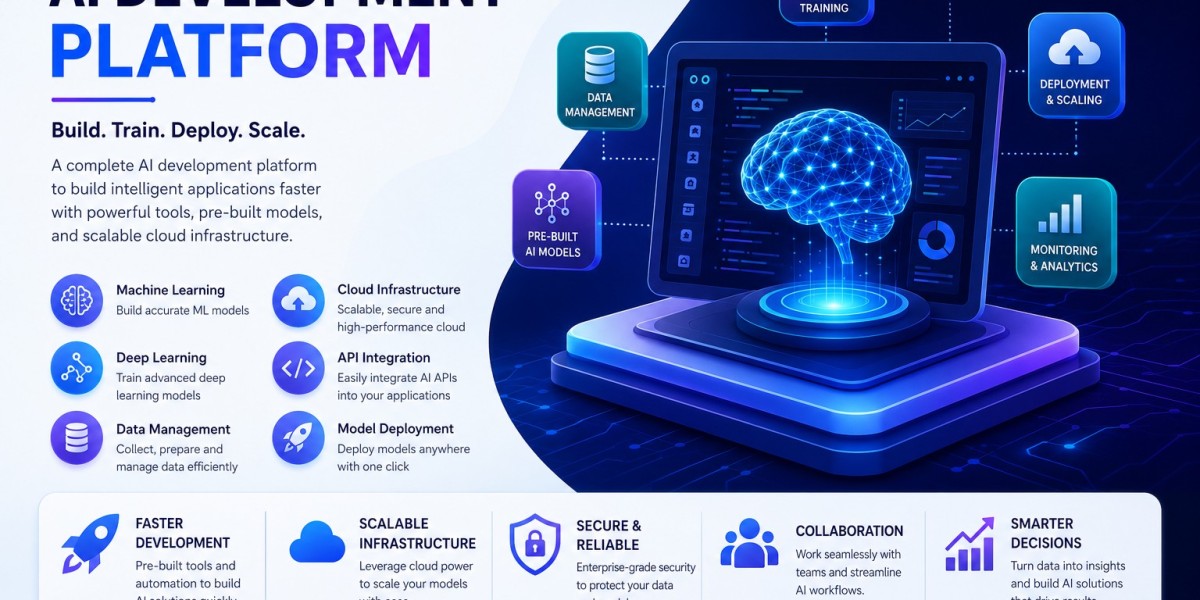
An AI Development Platform is a software environment that provides developers and businesses with tools for building, testing, deploying, and managing artificial intelligence applications.
Instead of creating every component independently, developers can use a platform that provides access to AI models, development frameworks, APIs, data tools, testing features, and deployment capabilities.
The exact features vary between platforms, but the overall purpose is to make AI development faster, easier, and more manageable.
Why Are AI Development Platforms Important?
Developing an AI application often requires multiple technical components. Developers may need to prepare data, select an appropriate model, create an application interface, connect APIs, test results, monitor performance, and deploy the final solution.
Managing all these components separately can increase development time and complexity.
An AI development platform can bring many of these capabilities together. This allows development teams to focus more on solving business problems instead of spending excessive time managing infrastructure.
Key Features of an AI Development Platform
1. AI Model Integration
A good platform can provide access to different AI models or make it easier to integrate models into applications. Developers can select models based on the specific requirements of their projects.
For example, an application may require a language model for generating text, a vision model for analyzing images, or a predictive model for analyzing business data.
2. Data Management
Data plays an important role in artificial intelligence. AI applications often require large amounts of organized and reliable data.
Development platforms may provide tools for storing, processing, preparing, and managing data. Better data management can help development teams create more reliable AI solutions.
3. APIs and Integrations
APIs allow applications to communicate with external services and AI models. An AI development platform can make these integrations easier by providing APIs, connectors, or development libraries.
This can help developers add AI features to existing websites, mobile applications, business systems, and other software.
4. Testing and Evaluation
AI applications need to be tested carefully. Developers need to understand whether an AI model is producing useful, accurate, and reliable results.
Development platforms may provide testing and evaluation tools that help teams monitor model performance and identify areas that require improvement.
5. Deployment
Creating an AI model is only one part of the development process. The model also needs to be deployed so users or other applications can access it.
An AI development platform can simplify deployment by providing infrastructure and tools for making AI applications available in production environments.
Benefits of Using an AI Development Platform
Faster Development
One of the biggest benefits is faster development. Developers can use existing tools, frameworks, APIs, and infrastructure instead of building everything from the beginning.
This can reduce development time and allow businesses to launch AI-powered applications more quickly.
Reduced Complexity
AI development can involve complex infrastructure and technical requirements. A development platform can simplify many of these processes and provide a more organized environment for development teams.
Improved Collaboration
AI projects often involve developers, data scientists, engineers, product managers, and business teams. A centralized development environment can make collaboration easier by giving team members access to shared tools and resources.
Scalability
As an AI application becomes more popular, it may need to handle additional users, requests, and data. A suitable platform can provide infrastructure that allows applications to scale as business requirements grow.
Cost Efficiency
Building and maintaining AI infrastructure independently can require significant technical resources. Using a development platform may help businesses reduce infrastructure management requirements and make better use of development resources.
Applications of AI Development Platforms
AI development platforms can be used across many industries and business functions.
Customer Support
Businesses can build AI-powered chatbots and virtual assistants that answer common questions, provide information, and support customers.
Marketing
AI applications can analyze customer behavior, assist with content creation, personalize campaigns, and identify potential opportunities.
Healthcare
AI can help organizations analyze information, support administrative processes, and develop intelligent applications for different healthcare workflows.
Finance
Financial organizations can use AI for fraud detection, risk analysis, forecasting, automation, and customer support.
E-Commerce
Online businesses can use AI for product recommendations, customer service, search improvements, personalization, and demand forecasting.
How to Choose an AI Development Platform
Choosing the right platform depends on the project's requirements. Businesses should evaluate several factors before making a decision.
First, consider the AI capabilities offered by the platform. Make sure it supports the models and technologies required for the project.
Next, evaluate integration options. The platform should work well with existing business systems, databases, APIs, and applications.
Security is another important consideration. Businesses should understand how the platform handles data, authentication, access control, and privacy.
Scalability should also be considered. A platform that works for a small prototype may not necessarily be suitable for a large production application.
Finally, businesses should consider pricing, developer experience, documentation, support, and long-term flexibility.
AI Development Platforms and the Future of Software
AI is becoming increasingly integrated into traditional software development. Applications are no longer limited to predefined rules and workflows. Modern applications can understand language, analyze information, generate content, make predictions, and assist users.
AI development platforms can make these capabilities more accessible to development teams. They provide a structured environment where businesses can experiment with AI, develop prototypes, and eventually deploy production-ready applications.
As AI technology continues to evolve, development platforms are likely to become increasingly important for organizations that want to incorporate intelligent features into their products and internal systems.
Conclusion
An AI Development Platform provides the tools and infrastructure required to build, test, deploy, and manage AI-powered applications. It can simplify development, reduce complexity, improve collaboration, and help businesses bring AI solutions to market faster.
Whether a company wants to develop an intelligent chatbot, recommendation system, predictive analytics application, or AI-powered business tool, choosing an appropriate development platform can make the development process more efficient.
By selecting a platform based on AI capabilities, integrations, security, scalability, cost, and developer experience, businesses can build AI applications that support their goals and create long-term value.