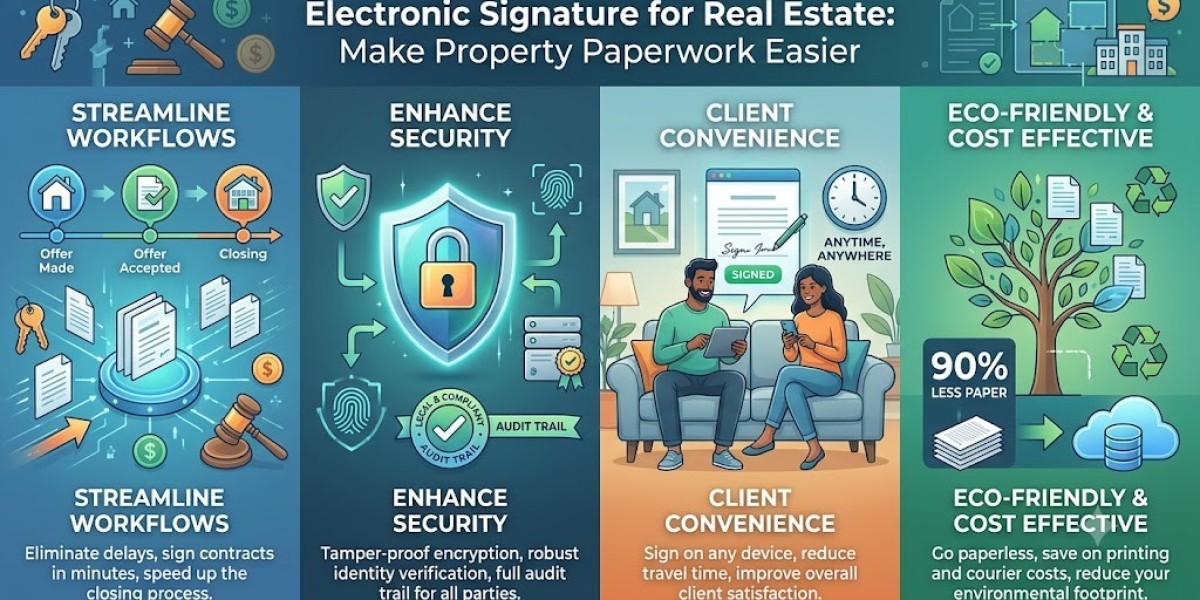

Buying, selling, renting, or managing a property involves more than finding the right location. Every transaction requires documents, approvals, confirmations, and communication between different people. Buyers, sellers, landlords, tenants, property agents, and financial professionals may all need to review and sign paperwork before a deal can move forward. When these documents are handled through traditional paper methods, even a small delay can affect the entire process.
An electronic signature for real estate offers a practical way to manage many of these document-related activities. Instead of printing, signing, scanning, and sending files repeatedly, property professionals can prepare documents digitally and share them with the relevant parties. This can make routine paperwork easier to coordinate, especially when people are working from different locations.
However, adopting electronic signing is not simply about replacing handwritten signatures. Real estate professionals also need to consider document accuracy, identity verification, security, and applicable legal requirements. Understanding these areas helps businesses create a more reliable property documentation process.
1. Why Traditional Property Paperwork Creates Delays
Real estate transactions often involve several stages, and each stage may require different documents. A buyer might need to sign an offer, a seller may need to approve certain conditions, and an agent may have additional agreements to complete. Rental transactions also involve applications, lease agreements, inspection records, and other documents.
When paperwork is handled manually, these activities can become difficult to coordinate. A document may need to be printed in one office, signed by someone in another location, and returned before the next person can review it. If a page is missing or a signature appears in the wrong place, the document may need to be sent again.
These issues become more noticeable when several people are involved in a transaction. Agents may spend time following up with clients instead of focusing on property enquiries, viewings, and negotiations.
Electronic signing can reduce some of this unnecessary movement. Documents can be prepared and shared electronically, while recipients can review them using supported devices. Depending on the platform, the sender may also receive updates about document progress.
The biggest benefit is a more organised workflow. Rather than managing several printed copies, property professionals can work with a central digital process and maintain clearer records of completed documents.
2. Property Documents That Can Benefit from Electronic Signing
Not every property document follows the same process, but many routine agreements can be prepared for electronic signing where local rules permit it.
Rental agreements are a common example. A landlord or property manager may need signatures from tenants before handing over a property. An electronic workflow can help collect the required signatures without arranging multiple office visits.
Property agents can also use digital documents for selected service agreements, client authorisations, brokerage arrangements, and property management paperwork. Buyers and sellers may benefit from digital handling of certain offers, acknowledgements, and transaction-related forms.
The exact documents that can be signed electronically depend on the transaction and applicable laws. Some documents may require witnesses, notarisation, original paper records, or specific identity checks.
Before sending an agreement, professionals should check that the document contains accurate property details, payment conditions, dates, responsibilities, and the correct names of all participants. Every signer should also have an opportunity to review the complete document.
A suitable digital signature online platform can make this process more convenient by allowing users to add signature fields, date fields, and other required information before sharing the file. The important thing is to choose the right signing method for each document rather than assuming that every property form can follow an identical process.
3. Supporting Better Communication Between Buyers, Sellers, and Agents
Communication is one of the most important parts of a property transaction. A buyer may have questions about a contract, a seller may need to approve revised terms, and an agent may be responsible for coordinating the next step. When everyone is dealing with separate paper copies and email attachments, it becomes difficult to understand which version is current.
Electronic document workflows can make these interactions easier to manage. A property professional can send the relevant document to the required participants and specify where signatures or acknowledgements are needed. Some platforms also support signing orders, which help documents reach people in a planned sequence.
For example, a property management agreement might first require approval from the property owner and then confirmation from the management representative. A structured workflow can make these responsibilities clearer.
Automatic notifications and reminders can also help when a recipient has not completed a signing task. This does not remove the need for personal communication, but it can reduce the amount of manual follow-up.
Businesses should establish clear rules about who can prepare, edit, approve, and send documents. They should also avoid sending several confusing versions of the same agreement. A centralised approach makes it easier for everyone to work from the correct document and understand its status.
4. Keeping Sensitive Property Information Protected
Property documents often contain private details, including names, contact information, addresses, financial terms, and identification-related information. These records should be handled carefully throughout the signing process.
Before choosing an electronic signing service, real estate businesses should understand how the platform protects stored and transmitted documents. Useful safeguards may include encryption, account authentication, access permissions, secure document storage, and activity logs.
Access control is particularly important for property management companies. An employee handling rental paperwork may not need access to every financial or contractual record held by the business. Assigning permissions according to job responsibilities can help limit unnecessary exposure.
Businesses should also understand how completed documents can be downloaded, stored, retained, and deleted. A clear record-retention policy helps prevent important agreements from being lost or kept longer than necessary.
An audit trail can provide useful information about document activity, including when a file was sent, viewed, or signed. However, an audit trail does not automatically guarantee identity or legal validity. Additional verification may be needed depending on the document.
The purpose of these safeguards is to make electronic signing dependable, not simply convenient. Property professionals should evaluate security features before moving sensitive customer documents into any digital system.
5. Connecting Real Estate with Other Digital Document Workflows
Property businesses do not work independently of other industries. They regularly communicate with banks, insurance providers, educational institutions, contractors, and service organisations. Each of these groups may have its own document requirements.
For example, a property buyer may need to coordinate with a financial institution before completing a purchase. The lender may require applications, declarations, and agreements to be reviewed and signed. This is where electronic signature financial services workflows can support communication between financial organisations and their customers.
Property management companies may also work with educational institutions when managing accommodation arrangements for students. In such situations, esignature solutions for education can help institutions organise accommodation agreements, parent acknowledgements, and other administrative forms where electronic signing is permitted.
These examples demonstrate why document systems should be flexible enough to support different types of organisations. However, each industry may have its own security and compliance requirements.
A real estate business should not assume that a process suitable for a rental agreement will automatically meet the needs of a bank or university. Instead, it should understand the document, identify all participants, and select an appropriate workflow for the task.
6. Choosing an Electronic Signing Solution for Property Businesses
Selecting a platform requires more than comparing prices or looking at the design of its interface. A real estate company should first identify the types of documents it handles regularly and the number of people involved in each process.
Multiple-signer support can be useful when owners, tenants, agents, and representatives all need to complete the same agreement. Signing-order controls can help manage approvals, while automatic reminders may reduce delays caused by pending signatures.
Document templates are another useful feature. Property businesses often prepare similar agreements repeatedly, so templates can save time and reduce formatting mistakes. Users should still check every document before sending it because property terms may differ from one transaction to another.
Mobile compatibility is also worth considering. Buyers, tenants, and agents may need to review documents while travelling or working outside an office. A platform that works across supported devices can make access more convenient.
Finally, check customer support, storage options, file compatibility, pricing, and the provider's security documentation. Confirm whether the service supports the electronic signature requirements applicable to your location and transaction type.
The right platform should fit the actual working process of the business. Buying a large package with features that employees never use may not be as valuable as selecting a straightforward solution that handles everyday property documents properly.
Conclusion
Real estate paperwork can become complicated when several people, documents, and approval stages are involved. Electronic signing provides a practical way to organise many routine property agreements while reducing the delays associated with printing, scanning, and physical document delivery.
Using an electronic signature for real estate can help property agents, landlords, buyers, sellers, and management companies coordinate document signing more efficiently. Features such as multiple signers, reminders, document templates, and activity records can make daily administration easier.
At the same time, businesses should pay attention to privacy, identity verification, document storage, and local legal requirements. Whether the organisation is using a digital signature online solution, supporting electronic signature financial services, or exploring esignature solutions for education, every workflow should be designed around the needs of its users.
A well-planned digital document process does more than reduce paper. It helps property professionals spend less time chasing documents and more time supporting clients throughout their property journey.