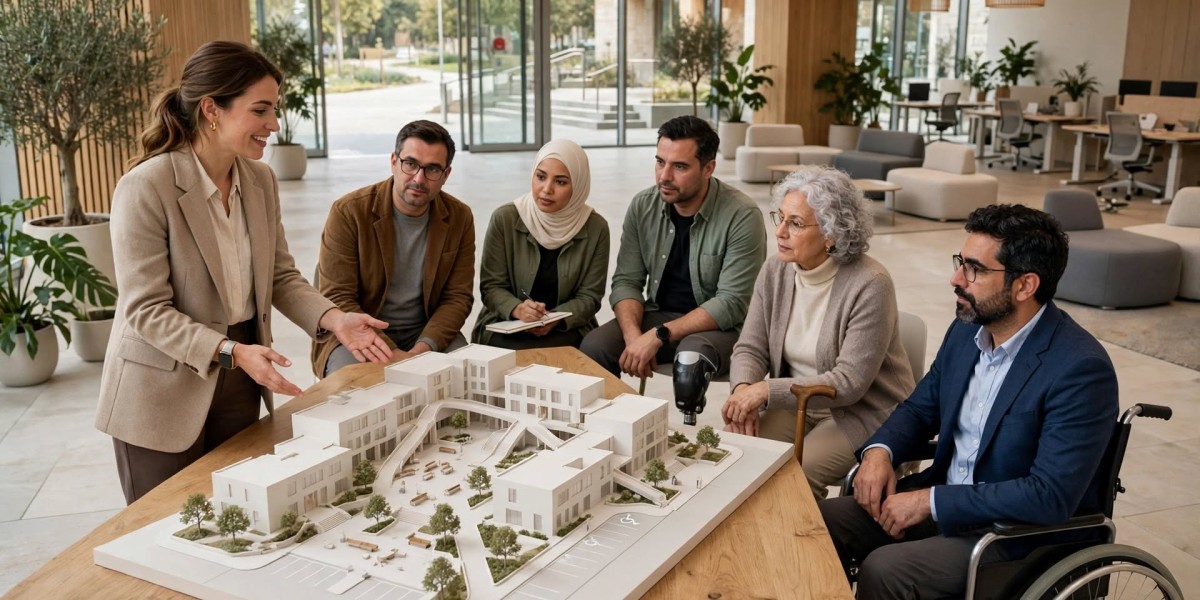

A building may have accessible entrances, suitable facilities and clear pathways, but people can still experience difficulties when moving between these areas. Understanding the complete experience is an important part of creating an inclusive environment. An accessibility user journey assessment helps organisations examine how people interact with a building from arrival to departure and identify barriers that may affect their experience.
Instead of looking at individual features separately, this approach considers how different parts of a facility connect. It helps project teams understand whether people can reach the places they need, find their way around and use available facilities with greater independence.
Why Looking at the Complete accessibility user journey assessment Matters
People experience buildings in different ways. Someone visiting an office, hospital, educational facility or public space may need to complete several steps before reaching their destination. Each step can create a potential accessibility challenge.
For example, a visitor may find accessible parking but struggle to reach the main entrance. Another person may enter the building easily but have difficulty locating reception or understanding the signs. Even when individual facilities appear accessible, the connections between them may create obstacles.
A complete journey considers these stages together:
Arriving at the property and finding suitable parking or drop-off areas.
Reaching and entering the building.
Locating reception or the relevant service point.
Understanding signs and navigating internal routes.
Reaching and using the required facilities.
Finding the way back and leaving the building.
Considering these stages helps organisations understand the experience from the user's perspective. It also highlights why accessibility should not be measured only by counting individual features.
Vortex Access provides user journey assessment services as part of its wider work in built-environment accessibility. This approach supports a better understanding of how people move through and interact with different spaces.
Identifying Barriers at Every Stage
One of the main benefits of reviewing a complete journey is the opportunity to identify barriers that might otherwise remain unnoticed. A problem does not always occur in the main facility itself. It may appear along the route leading to it or in the information people need to navigate the building.
For instance, a person may be able to enter a building but struggle to understand where to go next. A corridor may provide enough space in one section but become difficult to navigate near a doorway or reception area. Similarly, signs may be present but not provide clear information for everyone.
These situations show why different accessibility considerations need to work together.
An assessment can help organisations examine the relationship between physical features, circulation routes, facilities and communication. It can also encourage teams to consider the needs of people with mobility, visual, hearing and cognitive differences.
The findings provide a clearer understanding of where people may experience difficulties. This gives organisations a more practical starting point for deciding which areas need attention.
Connecting User Experience With an Accessibility Strategy
Identifying barriers is an important step, but organisations also need a clear way to respond to the findings. Without a structured direction, improvements may happen separately, leaving other accessibility concerns unresolved.
An accessibility strategy helps organisations establish a more organised approach to accessibility. It supports the development of priorities, objectives and actions that can guide decisions across projects and facilities.
User journey findings can contribute to this planning process by showing where people experience difficulties and which parts of the environment may need improvement. Instead of making decisions based only on individual observations, organisations can consider the wider experience when setting priorities.
For example, if an assessment identifies challenges around entrances, internal navigation and access to facilities, the organisation can consider these findings together. This may help teams coordinate design reviews, building improvements and other accessibility activities.
The connection between assessment and planning is important because accessibility should remain part of ongoing decision-making. A clear strategy can help teams maintain focus as projects develop and organisational needs change.
Using Assessment Findings to Improve Existing and New Spaces
User journey assessments can support organisations working with both existing buildings and proposed developments. The purpose is to understand how people may experience the environment and identify opportunities to improve accessibility.
For existing facilities, findings can help highlight physical and navigational barriers. Organisations may then consider whether a more detailed built-environment accessibility audit or compliance review is needed.
For new developments, considering user journeys during the design stage can help project teams examine how people will move through the planned environment. This can support accessibility design reviews and encourage teams to address potential concerns before construction is complete.
Vortex Access offers several related services that can support this work, including:
Accessibility design reviews: Examining proposed drawings and layouts for potential barriers.
Built-environment accessibility audits: Assessing existing buildings and identifying physical accessibility concerns.
Gap assessments and compliance reviews: Identifying gaps between building conditions and applicable requirements.
Universal design advisory: Supporting environments that consider a wider range of users.
Training and capacity building: Helping teams develop practical knowledge of accessibility.
These services can help organisations understand different aspects of accessibility and decide what further action may be appropriate.
Conclusion
An inclusive building should support people throughout their entire experience, not just at the entrance or within individual facilities. Looking at the journey from arrival to departure helps organisations recognise barriers, understand how different spaces connect and make more informed decisions about improvements. It also provides useful information for planning accessibility work across existing facilities and future developments.
Combining an accessibility strategy with practical assessment findings can help organisations turn identified concerns into clear priorities and planned actions. Vortex Access offers specialist accessibility services to help clients understand their environments and work towards more inclusive built spaces.
FAQ
1. What is a user journey assessment in building accessibility?
It examines the complete experience of a person using a building, from arrival and entry to navigation, access to facilities and departure. It helps identify barriers throughout that experience.
2. Why is it important to assess the entire journey?
A building may have accessible individual features but still create difficulties between them. Reviewing the complete journey helps identify problems that may not be visible when features are examined separately.
3. Who can benefit from a user journey assessment?
Organisations responsible for offices, public buildings, educational facilities, healthcare environments and other shared spaces can use assessments to better understand how people experience their facilities.
4. Can user journey findings support future building improvements?
Yes. Findings can help organisations identify areas requiring attention and consider whether design reviews, accessibility audits or compliance assessments are appropriate next steps.



