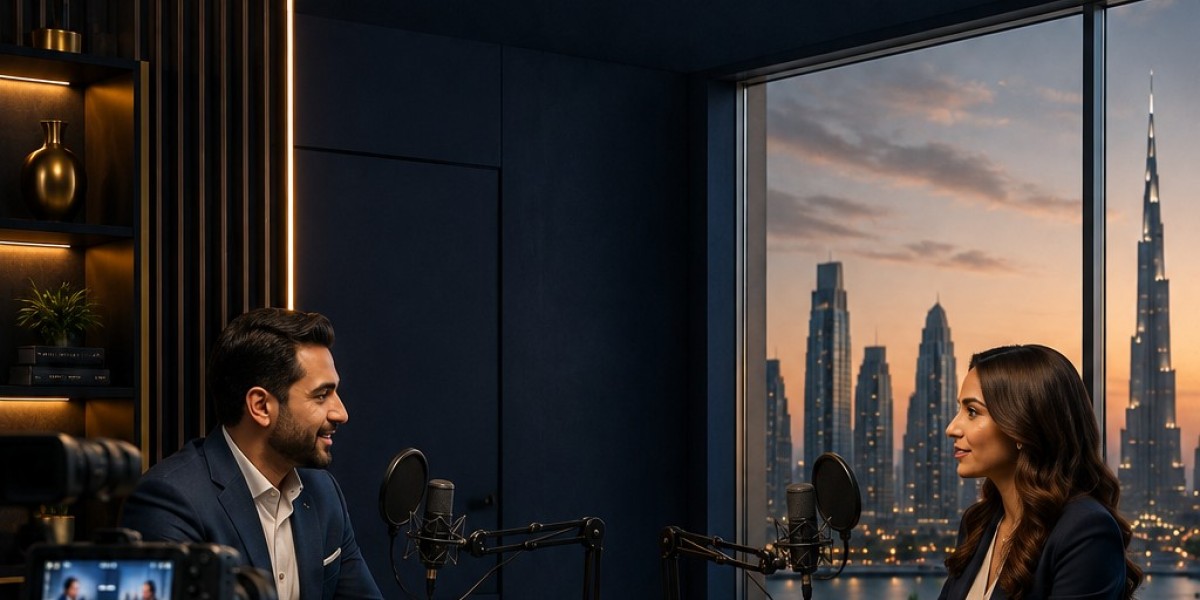

Every new podcaster eventually faces the same question: spend a few thousand dirhams on a home kit, or rent time in a Dubai podcast studio? Both routes work, but they solve different problems. This breakdown looks at real costs, room acoustics and the point where renting starts to make more sense than buying.
What a Home Setup Really Costs
Most guides stop at the microphone. A single-host audio kit has five parts: a dynamic microphone, an audio interface, closed-back headphones, a boom arm and some acoustic treatment.If you plan to film, the bill climbs quickly. One 4K camera, a lens, a tripod, lights and a backdrop can cost as much as the audio kit, and a three-camera setup multiplies that. Searching for podcast equipment Dubai retailers stock will show you the range, but remember the hidden cost is time: learning to set levels, sync footage and fix problems yourself.
Maintenance is the other line item people forget. Microphones need pop filters and shock mounts, cables fail, cameras overheat in warm rooms and software updates break workflows at the worst moment. None of that is a reason not to buy, but it explains why many experienced creators still rent for their biggest shoots.
Where Home Setups Struggle in Dubai
Many apartments here have glass walls, tiled floors and high ceilings, all of which bounce sound around. Add air conditioning, building works and thin shared walls, and your cleanest take may be the one recorded at 3am. Acoustic panels help, but in a rented flat they rarely cover enough surface to change much.
Run these checks before you buy anything:
• Record 30 seconds of silence and listen for hum, hiss and traffic
• Clap once and listen for an echo that lingers
• Repeat the test at your quietest hour to see how much your noise floor changes
• Confirm whether your lease lets you treat walls and ceilings at all
If the checks go badly, that doesn't mean a home setup is hopeless. A dynamic microphone used close to the mouth rejects far more room sound than a condenser does, and a rug, curtains and a bookshelf behind you can cut reflections noticeably. Those fixes are cheap, but they work best for solo audio. Once you add a guest across the table and cameras pointing at glass, you're fighting the room again.
What a Studio Adds Beyond the Equipment
A Dubai podcast studio offers more than gear, though. Gulf Podcast Studios in Business Bay provides a sound-treated room, broadcast microphones, a mixer, three 4K cameras with professional lighting and an operator for every session. The operator is the piece you can't buy off a shelf: someone watching levels and framing while you focus on the guest.
Lighting is another gap. A single softbox gives flat video, while a studio rig separates you from the background and keeps skin tones consistent from one episode to the next. It's also the cheapest way to make a multi-camera cut look intentional rather than accidental.
The numbers are straightforward. Recording costs AED 450 an hour, or AED 2,995 for a ten-hour bundle you can use over six months. A three-camera kit with lighting and audio would likely cost several times that before your first recording, and you'd still lack the room. For interview shows and video podcasts, renting often delivers a better result for less money.
Think about time as well as money. Setting up a home studio for each recording, testing levels, checking cables and syncing files can easily take an hour before you say a word. In the studio, the operator has everything running when you arrive, so your booked hour is spent recording rather than troubleshooting. For anyone billing clients or publishing on a schedule, that reliability is worth real money.
A Hybrid Approach That Keeps Costs Down
You don't have to choose one. Many creators split the work: solo episodes, voice notes and rehearsals at home on a decent dynamic microphone; guest interviews and video shoots in the studio. That way you buy only what you'll use daily and rent the rest.
Review the split every few months. As your audience grows and guests become more frequent, the balance often shifts toward more studio time.
Start with the pieces that carry over to any future setup: an interface and a dynamic microphone. Rent studio time for your first season, learn what your format needs, then upgrade deliberately. Buying podcast equipment from Dubai shops is the right call for solo audio shows, but guest-heavy video shows tend to favour renting. If you notice yourself recording the same format week after week, the ten-hour bundle at about AED 300 an hour is usually easier to justify than building a three-camera room at home.
A simple way to decide is to list every episode you plan over the next three months and mark each as solo audio, guest audio or video. Solo audio stays at home. Guest audio and video go to the studio. Add up the studio hours, compare them with the bundle price, and you have a budget based on your actual show rather than a guess.
Conclusion
Own the gear you'll use every day, and rent the room for what you can't build at home. That simple rule stops most creators from overspending on podcast equipment Dubai stores sell while still sounding professional. If you're comparing costs for your own show, a single hour in a podcast studio will tell you more than any spec sheet, and the Gulf Podcast Studios team can talk you through the options on WhatsApp. Start with one hour, compare it against your home recording, and let the difference make the decision.
FAQs
1. Is it cheaper to buy equipment or rent a studio?
For solo audio shows, buying is often cheaper over time. For video or guest interviews, renting usually costs less than building a multi-camera setup.
2. Do I need an audio interface?
If you use a dynamic XLR microphone, yes. USB microphones skip it, but they limit your upgrade options later.
3. Can I use my own microphone in the studio?
Ask the team before you book. The studio supplies broadcast microphones, and an operator sets the levels for you.
4. How many hours should I book to start?
One hour as a test. If you expect to record about seven hours or more, the ten-hour bundle is the better value.



