
Creating an engaging visitor experience is essential for businesses that want to stand out at competitive exhibitions. A successful trade show booth should do more than display products and company information; it should encourage interaction, communicate brand value, and give visitors a compelling reason to connect with your team. Partnering with experienced Las Vegas trade show booth builders can help businesses develop custom exhibition spaces that combine attractive design, interactive features, and practical layouts. With the right strategy, exhibitors can transform ordinary booth visits into meaningful conversations, qualified leads, and lasting business relationships.
Why Visitor Experience Matters at Trade Shows
Trade shows provide valuable opportunities to introduce products, meet potential customers, build partnerships, and strengthen brand awareness. However, attendees often encounter dozens or hundreds of exhibitors during a single event. Businesses must therefore create an experience that captures attention quickly and makes their offering easy to understand.
An engaging visitor experience helps your company communicate its value beyond brochures and promotional displays. Visitors can explore products, ask questions, participate in demonstrations, and interact directly with knowledgeable representatives.
A positive experience can also make your brand more memorable after the event. When attendees understand how your product solves a problem or improves their work, they are more likely to remember your company and consider future engagement.
The objective is not simply to attract the largest possible crowd. It is to attract the right audience and create interactions that support your business goals.
1. Understand Your Target Audience
The foundation of an engaging booth experience is understanding the people you want to reach.
Different audiences have different expectations. Business executives may appreciate concise presentations and private meeting areas, while technical professionals may want detailed demonstrations and product specifications. Distributors might prioritize pricing information, product availability, and partnership opportunities.
Before developing your booth concept, answer several important questions:
Who are your ideal visitors?
What challenges are they trying to solve?
Which products or services are most relevant to them?
What information will help them make decisions?
What action would you like them to take after visiting?
Use these insights to shape the booth layout, messaging, demonstrations, and promotional activities.
When your display reflects the needs of your target audience, visitors can recognize its relevance more quickly and are more likely to engage with your team.
2. Design an Attractive and Accessible Booth Layout
Your booth's layout influences how visitors approach, enter, and explore the space. A visually impressive design may still underperform if the entrance is obstructed or the display feels difficult to navigate.
A custom booth should balance appearance with accessibility and functionality.
Consider incorporating:
An open entrance that welcomes visitors.
Clearly positioned product displays.
A prominent reception or information counter.
Demonstration areas with sufficient viewing space.
Seating for longer discussions when needed.
Storage that keeps personal belongings and supplies out of sight.
Avoid overcrowding the booth with furniture, signage, or decorative structures. Visitors should be able to identify where to go and what to explore without feeling overwhelmed.
The layout should also support your staff's workflow. Team members need enough space to welcome visitors, demonstrate products, and hold conversations without disrupting other activities.
An effective layout makes the visitor journey feel natural from the first impression to the final interaction.
3. Use Strong Branding and Clear Messaging
Visitors often make quick decisions about which booths deserve their attention. Clear branding and concise messaging help them understand your company's offering without requiring a lengthy explanation.
Start with a strong visual identity. Use consistent brand colors, logos, typography, and imagery across the booth.
Your main headline should communicate your value proposition rather than simply repeat your company name. For example, a technology business might emphasize the problem its solution addresses, while a manufacturing company could highlight a product's primary performance benefit.
Keep the most important information visible from the aisle. Supporting details can appear on secondary graphics, product displays, brochures, or digital screens.
Avoid excessive text and complicated technical language in prominent locations. Visitors should be able to understand the central message within a few seconds.
Professional booth designers can help organize branding elements so that your message remains clear, attractive, and consistent throughout the display.
4. Incorporate Interactive Product Demonstrations
Product demonstrations give visitors an opportunity to understand what your offering does and how it works.
Instead of relying exclusively on static displays, consider creating demonstration stations where attendees can see products in action. Depending on your industry, these might include working equipment, software walkthroughs, product samples, interactive models, or guided presentations.
A successful demonstration should focus on the benefits that matter most to your audience.
For example, a manufacturing company could demonstrate how its equipment improves efficiency, while a software provider could show how its platform simplifies a common business process.
Keep demonstrations concise and repeatable so that visitors can participate without waiting too long. Train staff to explain key features clearly and invite relevant questions.
Ensure that demonstration equipment is reliable, safely positioned, and supported by the required power and connectivity.
Hands-on experiences can help visitors understand complex products more effectively than printed descriptions alone.
5. Use Technology to Enhance Engagement
Technology can make a custom trade show booth more interactive, but every digital feature should serve a clear purpose.
Depending on your objectives, consider using:
Large digital displays for product videos.
Touchscreens for interactive catalogs.
QR codes for product information and registration.
Digital lead-capture systems.
Live demonstrations or remote presentations.
Augmented reality experiences where relevant.
Video presentations that explain complex services.
For example, an interactive touchscreen might allow visitors to explore product configurations, compare features, or access technical documentation.
Digital displays can also help your team present information consistently while allowing visitors to explore content at their own pace.
However, technology should not replace meaningful human interaction. Staff members should remain available to answer questions and guide visitors through relevant information.
Before the event, test all equipment, verify connectivity, check power requirements, and prepare a backup plan for technical problems.
6. Create Dedicated Spaces for Meaningful Conversations
Not every visitor interaction should take place in the middle of a crowded demonstration area.
Some discussions require privacy, seating, or a quieter environment. This is especially important for businesses handling complex products, confidential requirements, pricing discussions, or strategic partnerships.
A custom booth can include a small meeting table, semi-private seating, or a designated consultation area.
The appropriate setup depends on the booth size and your expected visitor traffic. Smaller booths can use compact furniture and flexible layouts, while larger exhibits may support dedicated meeting spaces.
Make sure the meeting area remains accessible and does not block the main visitor pathway.
These spaces can help sales representatives move beyond introductory conversations and discuss specific customer requirements in greater detail.
7. Train Booth Staff to Deliver a Positive Experience
Even the most attractive booth cannot compensate for unprepared or disengaged staff.
Your team is responsible for welcoming visitors, explaining your products, answering questions, and identifying potential business opportunities. Their behavior has a direct influence on how attendees perceive your company.
Before the exhibition, provide staff with clear guidance about:
Your primary exhibition objectives.
The products or services being promoted.
Key benefits and differentiators.
Common customer questions.
Lead qualification criteria.
Product demonstration procedures.
The process for recording visitor information.
Follow-up responsibilities after the event.
Encourage team members to greet visitors naturally and ask open-ended questions rather than immediately delivering a sales pitch.
For example, asking, "What challenges are you looking to solve in this area?" can help reveal a visitor's needs and guide a more relevant discussion.
Staff should also be attentive, approachable, and prepared to direct visitors to the right specialist.
A helpful conversation often creates a stronger impression than an elaborate display feature.
8. Offer Valuable and Relevant Activities
Interactive activities can encourage visitors to spend more time at your booth, provided they are relevant to your audience and brand.
Consider organizing short product demonstrations, educational presentations, expert consultations, guided walkthroughs, or industry-specific discussions.
For example, a company introducing a new business solution could offer brief demonstrations throughout the day. An industrial supplier might demonstrate product performance or explain a practical application.
If you plan to use contests, giveaways, or games, make sure they support your objectives rather than attract visitors who have little interest in your products.
Activities should be easy to understand, accessible, and appropriately timed.
Provide clear information about what participants can expect and make sure staff members are available to answer questions.
The best engagement activities offer genuine value while giving visitors a natural reason to interact with your company.
9. Make the Visitor Journey Simple and Memorable
An effective booth experience follows a clear sequence. Visitors should be able to recognize your brand, understand your offering, explore relevant information, and decide what to do next.
You can plan this journey in several stages:
First impression: Use recognizable branding and a clear headline to attract relevant visitors.
Initial interaction: Welcome attendees and identify their interests through a brief conversation.
Exploration: Direct visitors toward appropriate products, displays, or demonstrations.
Deeper engagement: Provide expert explanations, consultations, or meeting opportunities.
Next step: Invite interested visitors to schedule a meeting, request a quote, download information, or discuss a potential partnership.
Not every attendee will complete every stage, and that is perfectly normal. The purpose is to make the experience intuitive rather than forcing visitors through a rigid sales process.
Use clear calls to action and ensure that visitors know how to continue the conversation after leaving the booth.
10. Use Lighting and Visual Elements Strategically
Lighting and visual design help establish the atmosphere of your booth and guide attention toward important information.
Effective lighting can highlight products, emphasize brand graphics, improve visibility, and create distinct areas within the display.
Consider using accent lighting for key products, balanced illumination for demonstration areas, and appropriately positioned lights for branded signage.
Large-format graphics can also communicate important information from a distance. Use high-quality images and keep the visual hierarchy simple.
Avoid excessive decorative lighting, distracting animations, or graphics that compete with your main message.
The objective is to make the booth easy to recognize and explore while supporting the overall visitor experience.
Work with your booth designer to ensure that lighting placement, electrical requirements, and graphic positioning are considered during the planning stage.
11. Keep Comfort and Accessibility in Mind
Visitor comfort is an important part of exhibition design. Attendees may spend several hours walking through a convention, so a booth that feels welcoming and easy to navigate can encourage meaningful interactions.
Depending on your space and objectives, consider comfortable seating, accessible pathways, clear signage, and sufficient room for visitors to view products.
Ensure that displays do not obstruct circulation and that important information can be understood without unnecessary effort.
Provide appropriate access for people with mobility requirements and confirm the applicable accessibility standards for the event and venue.
If your booth includes lengthy presentations, offer a suitable place for attendees to stand or sit while listening.
Small details can make the experience more comfortable and demonstrate that your company values its visitors.
12. Incorporate Sustainable Design Choices
Sustainability can contribute to a positive brand impression when it is integrated thoughtfully into booth planning.
Businesses can explore reusable booth structures, modular components, durable furniture, replaceable graphics, and energy-efficient lighting.
Rental booth solutions may also help companies avoid purchasing and storing structures they use infrequently.
However, sustainable choices should be evaluated according to your actual needs, logistics, durability, and total lifecycle costs.
For example, reusable components may be practical for a business exhibiting at several events, while replaceable graphics can allow the same structure to support different campaigns.
Discuss sustainability goals with your booth builder early in the design process.
A carefully planned sustainable booth can support your brand identity while helping reduce unnecessary materials and waste.
13. Prepare for Different Types of Visitors
Trade show audiences often include existing customers, new prospects, distributors, industry experts, media representatives, and competitors.
Each group may visit your booth with a different objective.
Your team should be prepared to adapt its approach according to the visitor's interests.
Existing customers may want product updates or service information. New prospects may need an introduction to your company. Distributors may want to discuss commercial arrangements, while technical visitors may request detailed specifications.
Consider creating simple visitor categories and preparing relevant materials for each.
You can also organize product information digitally so that staff members can quickly share the resources most appropriate to a conversation.
This flexible approach makes interactions more relevant and helps your team use its time effectively.
14. Integrate Lead Capture into the Booth Experience
An engaging visitor experience should support business outcomes, not just generate foot traffic.
Lead capture allows your team to record useful information about potential customers and organize follow-up activities.
Depending on your sales process, you might use digital forms, badge scanning where supported, QR codes, or a customer relationship management system.
Keep the process simple. Visitors should understand why you are collecting their details and how the information will be used.
Train staff to record relevant information, such as the visitor's interests, business needs, purchase timeline, and agreed next steps.
Prioritize meaningful interactions over collecting the largest possible number of contacts.
After the exhibition, categorize leads according to their level of interest and assign follow-up responsibilities. Prompt, relevant communication helps maintain the momentum created at the booth.
15. Measure the Success of Your Visitor Experience
Evaluating performance helps businesses understand which elements of the booth experience delivered value and which areas need improvement.
Before the exhibition, establish measurable objectives. These might include qualified leads, product demonstrations, scheduled meetings, visitor engagement, or sales opportunities.
After the event, review your results against those targets.
Useful indicators include:
Number of qualified leads collected.
Number of demonstrations completed.
Meetings held with target accounts.
Time spent engaging with relevant visitors.
Follow-up appointments scheduled.
Sales opportunities generated.
Feedback from visitors and booth staff.
If a particular demonstration attracts strong interest, consider expanding it at future events. If visitors frequently struggle to find a product display, revise the layout or signage.
Combine quantitative metrics with staff feedback and visitor comments to gain a more complete understanding of performance.
Continuous improvement helps you refine future exhibition experiences and allocate your marketing budget more effectively.
16. Work with Experienced Booth Design Professionals
Creating a successful visitor experience requires coordination between design, branding, logistics, technology, and marketing.
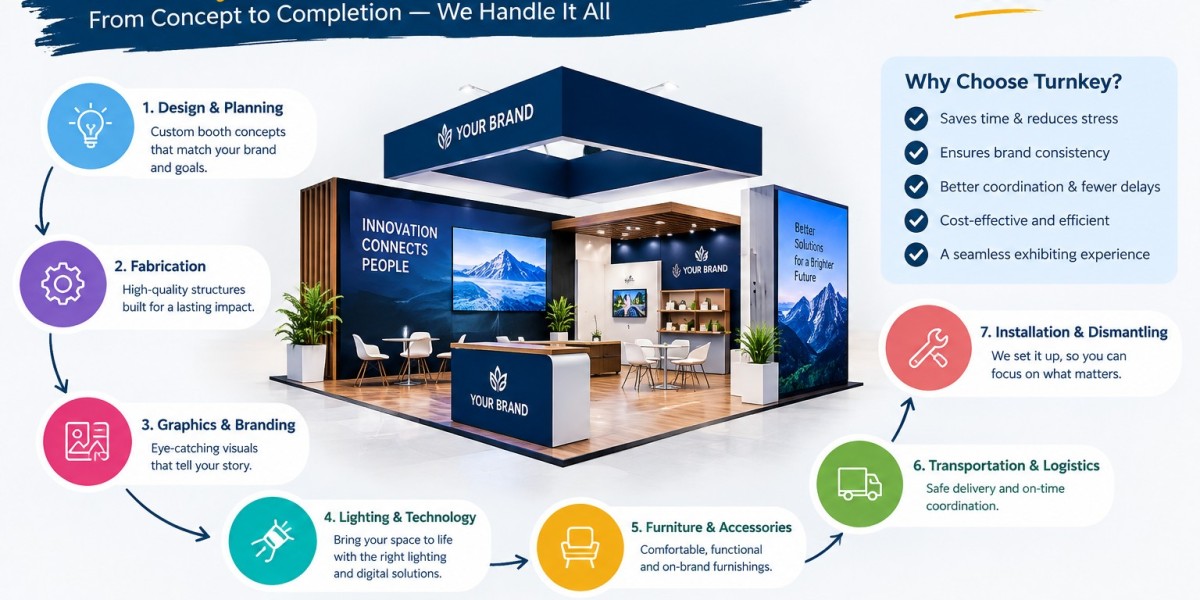
Professional booth builders can help translate your objectives into a practical exhibition environment. Depending on the agreed scope, they may support concept development, custom structures, graphics, lighting, furniture, technology integration, installation, and dismantling.
When selecting a provider, review its portfolio, project experience, communication practices, and ability to work within your budget.
Explain your target audience, exhibition goals, product requirements, and preferred visitor journey before the design is finalized.
Ask for a detailed proposal that clarifies the services included, project milestones, venue requirements, and additional costs.
A collaborative design process makes it easier to create a booth that reflects your brand while supporting real visitor needs.
Conclusion
Creating an engaging visitor experience requires more than attractive graphics or advanced technology. Businesses need a clear understanding of their audience, an accessible booth layout, compelling demonstrations, well-trained staff, and an effective process for capturing and following up on leads. Thoughtful lighting, relevant activities, comfortable spaces, and measurable objectives can further improve the overall experience. By collaborating with experienced Las Vegas trade show booth builders, businesses can create custom exhibition booths that attract relevant visitors, encourage meaningful conversations, strengthen brand recognition, and support long-term business growth.



