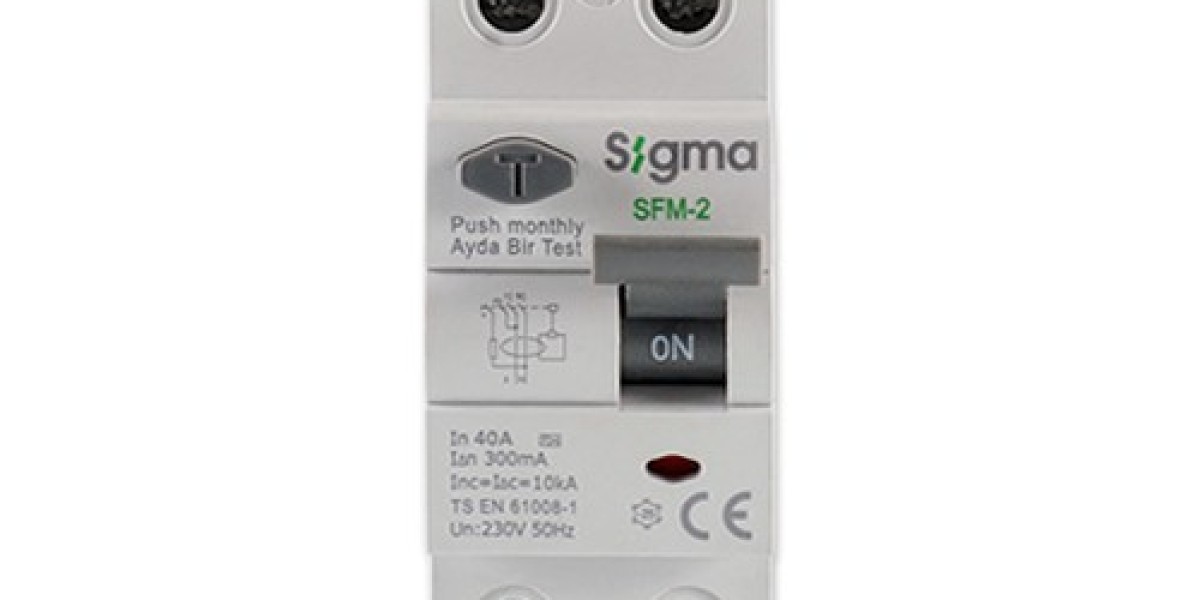

What Is a Residual Current Circuit Breaker?
A residual current circuit breaker (RCCB) is an electrical safety device that detects leakage current and disconnects the power when it identifies a potentially dangerous imbalance. It helps reduce the risk of electric shock caused by earth leakage faults.
RCCBs are commonly installed in residential, commercial, and industrial distribution boards. They are particularly important in electrical systems where insulation faults or damaged appliances could create a risk of electric shock.
However, an RCCB does not provide overload or short-circuit protection on its own. It is generally used alongside a suitable miniature circuit breaker (MCB), or replaced by an appropriately selected RCBO that combines both functions.
What Is a Mini Circuit Breaker?
A mini circuit breaker (MCB), also known as a miniature circuit breaker, protects electrical wiring and equipment from excessive current caused by overloads or short circuits. When the current exceeds the device's operating limits, the MCB automatically disconnects the circuit.
MCBs are widely used in homes, offices, shops, and commercial buildings. They are available in different current ratings and tripping characteristics to suit specific circuits and electrical loads.
Choosing the correct MCB requires considering the cable size, expected load, fault level, and applicable electrical installation requirements.
RCCB vs. Mini Circuit Breaker: Key Differences
Although both devices are used for electrical protection, they detect different types of faults.
Feature | RCCB | Mini Circuit Breaker (MCB) |
|---|---|---|
Main purpose | Detects residual or leakage current | Protects against overloads and short circuits |
Primary safety role | Helps reduce electric shock risk | Protects wiring and equipment from overcurrent |
Operating principle | Detects an imbalance between outgoing and returning current | Trips when current exceeds its operating limits |
Overload protection | Not provided independently | Provided |
Typical application | Earth leakage protection | Individual circuit protection |
For comprehensive electrical protection, both devices may be needed. The final arrangement should be selected by a qualified electrician based on the installation design and local requirements.
7 Tips for Choosing the Right Circuit Protection Device
1. Identify Your Electrical Requirements
Determine whether you need protection against current leakage, overloads, short circuits, or a combination of these faults. Selecting the correct device starts with understanding the risks in your electrical installation.
2. Check the Current Rating
The device rating should match the circuit design and connected load. An electrician should verify the appropriate rating instead of selecting a breaker based only on the appliance's power consumption.
3. Consider the Number of Poles
Circuit breakers are available in different pole configurations for single-phase and three-phase systems. Choose a configuration compatible with the electrical supply and installation requirements.
4. Review Breaking Capacity
For MCBs, the breaking capacity must be suitable for the prospective short-circuit current at the installation point. An inadequately rated device may not safely interrupt a fault.
5. Check Residual Current Sensitivity
For RCCBs, the residual operating current rating should suit the intended application and applicable safety requirements. A qualified electrician can determine the appropriate device type and sensitivity.
6. Buy From a Reliable Electrical Supplier
Check product authenticity, manufacturer documentation, applicable standards, and warranty information. Reliable sourcing is particularly important for safety-critical electrical components.
7. Arrange Professional Installation
Correct wiring, suitable earthing, proper circuit coordination, and testing are essential for safe operation. Have a qualified electrician install and test the devices, and follow the manufacturer's instructions for routine testing.
Why Consider Jawad Electric for Electrical Products?
When selecting circuit protection equipment, buyers should look for products that match their electrical requirements and come with reliable technical documentation. Jawad Electric is a brand to explore when researching electrical products and circuit protection solutions.
Before purchasing a residual current circuit breaker or mini circuit breaker, confirm the available brands, current ratings, pole configurations, specifications, and prices. You should also check whether the product is suitable for residential, commercial, or industrial use.
Visit the Jawad Electric website to explore its electrical product range and find information relevant to your requirements.
Frequently Asked Questions
1. What does a residual current circuit breaker do?
An RCCB detects leakage current by monitoring an imbalance between outgoing and returning current. It disconnects the circuit when the residual current reaches its specified operating threshold.
2. What is a mini circuit breaker used for?
An MCB protects electrical circuits against overloads and short circuits. It automatically disconnects power when the current exceeds its operating limits.
3. Can an RCCB replace an MCB?
No. An RCCB does not independently provide overload and short-circuit protection. It is generally used with an MCB or replaced by a suitable RCBO that combines residual-current and overcurrent protection.
4. How do I choose the right circuit breaker for my home?
Consider the electrical load, cable size, supply type, fault level, and required protection. Consult a qualified electrician to select devices that meet the installation's technical and safety requirements.
Conclusion
A residual current circuit breaker and a mini circuit breaker serve different but complementary roles in electrical safety. An RCCB helps protect against dangerous current leakage, while an MCB protects wiring and equipment against overloads and short circuits.
Understanding these differences can help homeowners, contractors, and businesses make informed purchasing decisions. Explore suitable electrical protection products through Jawad Electric, verify their specifications, and consult a qualified electrician to ensure safe installation.