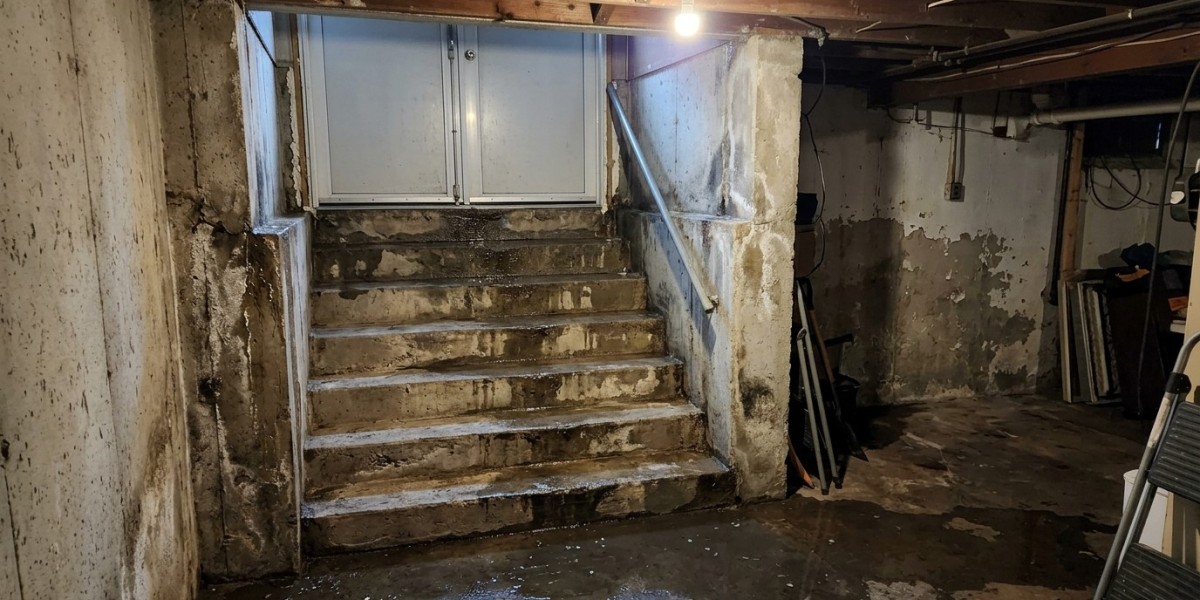

You replace the worn rubber seals, apply fresh caulk around the bulkhead frame, and close the doors properly. Everything looks secure until the next heavy rainfall leaves another puddle at the bottom of the basement stairs. It's frustrating, especially when you've already spent time and money trying to stop the leak.
The problem may have very little to do with the doors themselves. A bulkhead entrance includes several connected parts: metal or composite doors, a supporting frame, concrete or masonry sidewalls, and the opening where the stairwell joins the foundation. Water can enter through any of these areas. Finding the actual entry point matters more than applying another layer of sealant to the most visible gap.
The Water May Be Entering Somewhere Below the Door Frame
One reason bulkhead leaks can be difficult to trace is that water travels before becoming visible. Rainwater may pass through a gap behind the metal frame, move along the concrete wall, and eventually appear near the bottom step. By the time you notice the puddle, the original entry point may be several feet away. Sealing the lower section of the stairwell will not necessarily help if water continues flowing behind it.
Pay attention to where the wet surface begins rather than where the water finally collects. If the upper stairwell walls remain dry but moisture appears along the lower concrete joints, water may be entering through the surrounding masonry or foundation connection. If droplets appear directly beneath the door frame during rainfall, the frame joint or door assembly deserves closer examination. These observations are useful starting points, although concealed water paths may still require professional testing.
The Joint Between the Stairwell and Foundation
Many basement bulkhead entrances are built against the home's foundation wall. Over time, small movements, deteriorated mortar, or failure of the original joint treatment can leave openings between the two structures. Water accumulating in the surrounding soil may reach those openings and seep into the stairwell. This is different from rain passing through the door because the moisture is entering through a below-ground or partially buried connection.
A gap at this location cannot always be repaired by spreading ordinary caulk across the visible surface. The correct treatment depends on the size of the opening, whether movement is continuing, and how much water reaches the joint. Some nonstructural joints may need a suitable flexible sealing system, while cracked or deteriorated masonry can require more extensive repairs. Significant separation or movement should be assessed before any surface treatment is selected.
Check What Happens to Rainwater Around the Entrance
A bulkhead door is intended to shed ordinary weather exposure, not act as a barrier against a large volume of standing water. If the surrounding ground directs runoff toward the entrance, the doors and their joints may receive more water than the original installation was designed to handle. This frequently gets overlooked because homeowners naturally concentrate on the part of the structure where the leak becomes visible.
Imagine a downspout releasing roof runoff just uphill from the bulkhead. During light rainfall, the water may soak into the ground without causing noticeable trouble. During a stronger storm, runoff can travel across the surface and collect against the bulkhead frame. Even a relatively small opening becomes more troublesome when water repeatedly reaches it. Correcting the runoff problem can reduce the exposure that allowed the leak to develop.
Before arranging repairs, inspect the outdoor surroundings for:
Soil or pavement sloping toward the bulkhead entrance.
Downspouts releasing water close to the stairwell.
Standing water against the door threshold or concrete sidewalls.
Leaves and debris blocking existing drainage outlets.
Cracked pavement or settled surfaces directing water toward the structure.
The goal is to understand how water reaches the bulkhead before deciding how to stop it. Improving surface drainage may require adjusting grading, redirecting downspouts, or correcting settled paving. Any changes should move water toward an appropriate outlet without affecting neighboring properties or creating new drainage problems elsewhere.
Why Additional Caulking Does Not Always Work
Caulk is useful when applied to a properly prepared joint with a suitable product, but it cannot compensate for every installation defect. A sealant may fail if the surface is wet, dirty, unstable, or incompatible with the material being sealed. Some joints also expand and contract with temperature changes. If the product cannot accommodate that movement, it may separate from the surface or split shortly after application.
There's another detail worth understanding: a visible gap in a bulkhead door is not automatically evidence of a defective seal. Some manufactured basement doors have clearances designed to allow their panels to open and close correctly. The manufacturer may instead specify sealing particular frame seams, mounting surfaces, or the connection to the house. Filling every visible opening without checking the door design can interfere with its operation or fail to address the intended water barrier.
Frame Alignment Can Affect Water Protection
A door can be in reasonably good condition while its supporting frame has shifted out of alignment. This might happen because of deteriorated masonry, loose mounting hardware, or movement in the surrounding structure. When the frame is no longer square, the door may not close evenly or may leave one edge more exposed than another. New weatherstripping can improve the seal only if the components meet correctly when closed.
An inspection should therefore include how the doors fit against the frame, whether the frame is securely attached, and whether the mounting surface remains sound. Damaged anchors and deteriorated concrete should be corrected using methods suited to the existing materials. If the frame has shifted because the supporting structure is moving, simply forcing the doors into alignment may provide only temporary improvement. The underlying cause must be addressed before the repair can be considered dependable.
A Wet Stairwell Does Not Always Mean the Doors Are Defective
When you notice your bulkhead leaking after rainfall, examine the surrounding concrete as carefully as the door panels. Water may be passing through a crack in the sidewall, a joint near the steps, or an opening where the stairwell meets the house. In these cases, replacing a sound door assembly would leave the original water path untouched. The leak may appear again because the moisture source was never corrected.
Concrete and masonry can develop cracks through settlement, shrinkage, temperature changes, or other movement. Not every crack indicates structural failure, but a crack that admits water deserves investigation. The repair material and method should match the type of defect rather than simply its visible width. A stable, nonstructural crack may require a different treatment from one associated with ongoing movement or displacement.
It's also important to recognize that some wet stairwells have more than one problem. Rain may enter around the frame while groundwater seeps through a lower wall joint. Repairing only one opening can reduce the amount of water without eliminating it. When several wet areas appear at different heights, the inspection should consider multiple water paths instead of assuming everything comes from a single damaged seal.
How Should the Bulkhead Be Waterproofed Properly?
Effective bulkhead waterproofing begins with understanding whether the problem involves direct rainfall, surrounding drainage, the door installation, or moisture entering through the concrete structure. Each source requires a different approach. Door-related leaks may call for frame repairs, manufacturer-approved sealing, or replacement of damaged components. Water entering through masonry may require crack or joint treatment, while recurring runoff problems may need exterior drainage improvements.
Where the bulkhead structure is accessible from outside, repairing the source of water entry can be more effective than treating only the wet interior surface. This may involve removing deteriorated materials, preparing the affected joint, and applying an appropriate waterproofing or sealing system. In some situations, exterior excavation or localized concrete repairs may be necessary. The work should account for how the repaired materials connect to adjacent surfaces so water cannot simply travel around the treated area.
A proper repair should also preserve the bulkhead's normal function. Doors need to open and close without obstruction, their hardware must remain accessible, and any required emergency escape function must be maintained. Waterproofing materials should not block designed drainage paths or interfere with the manufacturer's operating clearances. The completed work should address water movement without creating problems with access, ventilation, or safe operation.
Should You Add a Drain at the Bottom of the Bulkhead Stairs?
A drain can be useful where water is expected to reach the stairwell, but it should not be installed without considering where the collected water will go. Some stairwells already have drainage openings that connect to an appropriate collection or discharge system. If an existing drain is obstructed, water can accumulate around the lowest step and enter through the basement doorway. Clearing and inspecting that system may be more appropriate than modifying the door.
For an entrance without a drain, the feasibility of adding one depends on the available discharge route, site elevation, surrounding foundation conditions, and applicable plumbing requirements. A drain with no reliable outlet may simply collect water without removing it. Connecting it to an unsuitable pipe can create additional problems, including backups or prohibited discharges. The drainage arrangement should be evaluated as part of the property's broader water-management system.
A drain is also not a substitute for repairing a leaking structural joint. If groundwater is passing through the stairwell wall, collecting it at floor level may manage the visible water without preventing moisture from reaching the masonry. The proper choice depends on whether the goal is to intercept surface runoff, manage groundwater, or correct a defective building connection.
What Can You Do to Find the Leak Without Damaging Anything?
You don't need to dismantle the bulkhead to gather useful information. Start with photographs taken during or shortly after rainfall, particularly when the affected surfaces are still wet. Record whether water appears beneath the door panels, along the frame, at the stairwell walls, or at the joint with the basement foundation. Comparing these observations over several storms may reveal a consistent pattern.
Avoid using a pressure washer or forcing large volumes of water against the structure to locate the leak. High-pressure water can enter openings that might not admit water during ordinary rainfall, producing misleading results. It may also damage aging seals or masonry. If controlled water testing is appropriate, it should be carefully planned to isolate individual areas without deliberately flooding the stairwell or exposing electrical equipment to water.
When the basement is already wet, safety becomes the first concern. Do not touch electrical equipment in standing water, and avoid walking on damaged or unstable stair surfaces. Severely rusted doors, loose handrails, crumbling concrete, and deteriorated steps should be inspected before anyone attempts repairs. A relatively small water leak can exist alongside a separate structural or access hazard.
When Does Repair Make More Sense Than Replacement?
Replacing a complete bulkhead door assembly may be unnecessary when the structure remains sound and the leak comes from a repairable joint. Weatherstripping, suitable sealing materials, frame adjustments, or localized masonry repairs can be appropriate depending on the diagnosis. These options should be considered when the doors still operate correctly, the frame is stable, and the supporting structure has not experienced significant deterioration.
Replacement becomes more reasonable when corrosion has weakened the metal, the frame is extensively damaged, or the door assembly can no longer close or open safely. However, installing new doors over cracked or unstable masonry can reproduce the same water problem. If the concrete surround needs work, that condition should be corrected before the new assembly is secured.
A useful repair proposal should identify the entry point, explain which components need attention, and describe how the completed work will be checked. It should also distinguish essential repairs from optional improvements. This gives homeowners a practical basis for comparing solutions instead of choosing between a low-cost sealant job and full replacement without understanding why either is being recommended.
How to Keep Water From Returning After Repairs
After a repair, monitor the entrance during future rainfall rather than assuming the problem is permanently resolved because the surfaces appear dry. A repair completed during clear weather may not have experienced the conditions that caused the original leak. Look for fresh water trails, damp concrete, or changes in how the doors close. Photographs of the same locations before and after storms can help establish whether the amount or pattern of water entry has changed.
Seasonal maintenance also matters, particularly in places with freezing winters. Clear leaves from drainage outlets, remove snow accumulation in a way that does not damage the doors, and examine accessible joints for deterioration. Keep gutters functioning properly and watch for settling soil that redirects runoff toward the stairwell. If dampness returns repeatedly, revisit the original diagnosis instead of continuing to cover the same location with new sealant.
Conclusion
Stopping water around a bulkhead entrance requires more than finding a visible gap and filling it. The surrounding drainage, supporting masonry, door alignment, and connection to the foundation all influence whether rainwater reaches the basement. One often-overlooked component is flashing, which helps direct water away from vulnerable joints where building materials meet. When these connections are installed and maintained correctly, they help reduce water intrusion without interfering with normal door operation. The most dependable repair is the one that follows the actual water path and corrects its source rather than hiding the evidence of a leak.






