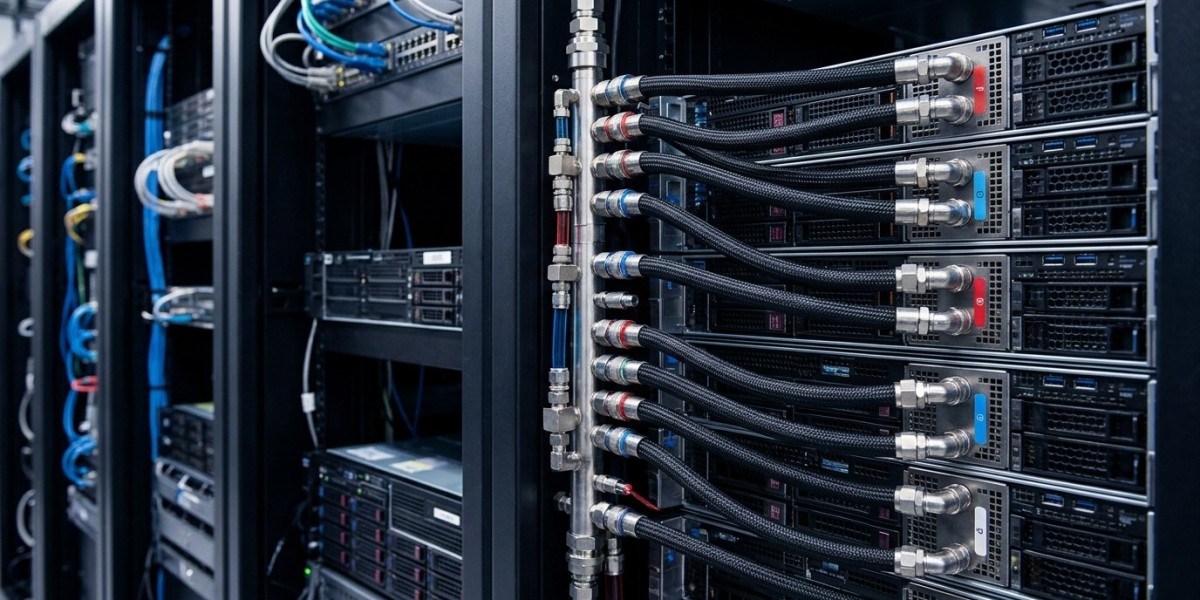

Liquid cooling is becoming an important technology for modern data centers. As artificial intelligence, cloud computing, and high-performance computing continue to grow, servers generate more heat and require efficient cooling systems. Traditional air cooling may not provide sufficient heat removal for high-density server racks. Liquid cooling offers an effective alternative by transferring heat away from critical components through circulating coolant.
Fittings for liquid-cooled data centers play an essential role in these systems. They connect pipes, hoses, manifolds, pumps, heat exchangers, and cooling distribution units. High-quality fittings help maintain reliable coolant flow, prevent leaks, and support consistent cooling performance. Selecting suitable components is important for protecting expensive equipment and maintaining uninterrupted data center operations.
Why Fittings Matter in Liquid Cooling Systems
A liquid cooling system depends on a network of interconnected components. Coolant must move through this network at the correct flow rate and pressure to remove heat efficiently. Fittings provide secure connections between different parts of the system while supporting the required flow conditions.
Poor-quality fittings can increase the risk of leakage, pressure loss, corrosion, and maintenance problems. Even a small leak near electronic equipment can cause significant damage and unexpected downtime. For this reason, data center operators need fittings designed for the operating pressure, coolant chemistry, temperature range, and installation environment.
Reliable fittings also simplify maintenance. Components that allow easy disconnection and reconnection can help technicians service cooling equipment without replacing entire pipe sections. This is particularly useful in facilities where server capacity continues to expand.
Common Types of Liquid Cooling Fittings
Different cooling designs require different fitting types. Understanding their applications helps engineers select components that meet system requirements.
Stainless Steel Pipe Fittings
Stainless steel fittings are widely considered for applications that require strength, durability, and corrosion resistance. They can connect pipes, valves, pumps, and other components in liquid cooling infrastructure. Their performance depends on the stainless steel grade, coolant composition, pressure rating, and operating conditions.
Common options include elbows, tees, reducers, couplings, and adapters. These components help direct coolant, divide flow between branches, and connect pipes of different sizes. Proper material selection is especially important when the system uses treated water or specialized cooling fluids.
Quick-Disconnect Fittings
Quick-disconnect fittings allow technicians to separate coolant lines without dismantling large sections of the cooling network. They are particularly useful in direct-to-chip cooling systems, where cold plates deliver coolant to processors and other high-performance components.
Depending on their design, these fittings can reduce coolant spillage during maintenance. However, buyers should verify compatibility, leakage performance, pressure limits, and connection standards before selecting a product.
Hose and Tube Fittings
Flexible hoses and rigid tubes connect server cooling components with distribution manifolds and cooling units. Hose fittings provide secure connections between flexible coolant lines and system equipment. Tube fittings support reliable connections in installations that use rigid tubing.
The correct fitting must match the tube or hose dimensions and material. Engineers should also consider vibration, bending requirements, installation space, and the possibility of thermal expansion.
Valves and Manifold Connections
Valves regulate or isolate coolant flow, while manifold connections distribute coolant across multiple cooling branches. These components help maintain balanced cooling and make it easier to isolate individual servers or equipment sections during maintenance.
Compatible fittings ensure that these components integrate correctly with the wider cooling network.
Choosing the Right Materials
Material selection directly affects the reliability of liquid cooling infrastructure. Stainless steel, brass, copper alloys, and engineered polymers may be suitable for different applications, depending on coolant chemistry and system requirements.
Stainless steel can offer good mechanical strength and corrosion resistance when the correct grade is selected. Copper and compatible copper alloys are common in heat-transfer equipment, but compatibility with adjoining metals and coolant additives must be evaluated. Polymer fittings may suit certain low-pressure or specialized applications when their temperature and chemical resistance meet the design requirements.
Engineers should also consider galvanic corrosion when dissimilar metals are connected. Reviewing the entire coolant circuit is more effective than evaluating each fitting individually.
Important Factors When Selecting Data Center Fittings
Several technical factors should guide purchasing decisions. First, check the required pressure and temperature ratings. Fittings must operate safely within the system's expected conditions, including pressure changes during startup and shutdown.
Second, confirm the connection type, thread standard, dimensions, and sealing method. Incompatible connections can create installation difficulties and increase leakage risks.
Third, assess coolant compatibility. Water-based coolants, water-glycol mixtures, and other engineered fluids can affect fitting materials and seals differently. Manufacturers' compatibility information should be reviewed before installation.
Flow requirements also matter. Fittings with unsuitable internal dimensions or excessive restrictions may contribute to pressure loss. Proper sizing supports efficient coolant circulation and reduces unnecessary demands on pumps.
Finally, consider maintenance access, expected service life, and supplier quality documentation. Clear product specifications make it easier for engineers to compare components and verify suitability.
Applications Across Modern Data Centers
Fittings for liquid-cooled data centers support several cooling architectures. Direct-to-chip systems circulate coolant through cold plates attached to processors, graphics processing units, and other heat-generating components. Immersion cooling uses a dielectric fluid to cool server hardware submerged in a specialized liquid. Rear-door heat exchangers and facility water loops also rely on appropriate piping connections and fittings.
Each application has unique requirements. A fitting suitable for a facility water loop may not be appropriate for direct contact with a specialized dielectric coolant. System designers must therefore evaluate the intended application before purchasing components.
As data centers adopt higher-density computing equipment, reliable fittings become increasingly important for scaling cooling capacity while maintaining operational stability.
Maintenance and Installation Best Practices
Correct installation helps prevent leaks and extends component service life. Technicians should follow manufacturer instructions for tightening, sealing, and connecting fittings. Excessive tightening can damage threads or seals, while insufficient tightening may result in leakage.
Before a cooling system enters service, the installation should undergo appropriate pressure and leak testing according to the system design and applicable requirements. Coolant quality should also be monitored to identify contamination, corrosion, or other conditions that could affect system components.
Routine inspections can identify worn seals, loose connections, corrosion, and signs of leakage. Keeping records of inspections and component replacements helps maintenance teams identify recurring problems and plan repairs before failures disrupt operations.
Conclusion
Fittings are essential components of liquid-cooled data centers because they support secure connections, reliable coolant circulation, and efficient heat removal. Stainless steel pipe fittings, quick-disconnect connectors, hose fittings, valves, and manifold connections each serve specific purposes within modern cooling infrastructure.
By evaluating material compatibility, pressure ratings, connection standards, flow requirements, and maintenance needs, data center operators can select fittings that support dependable long-term performance. As computing workloads continue to increase, investing in suitable cooling components will remain an important part of building efficient and reliable data center infrastructure.






