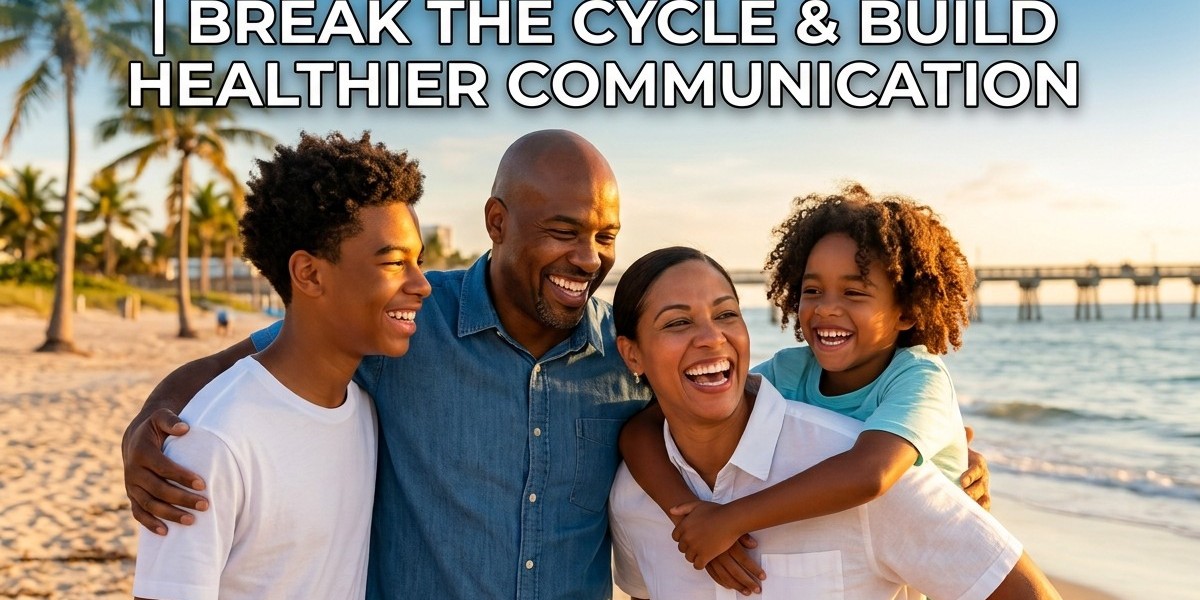

Anger management for families in Pompano Beach, FL is one of the most important areas of mental health work, and one of the most difficult. When one person in a family struggles with anger, everyone feels it. Partners walk on eggshells. Children learn to read moods before they can read words. Arguments that start small escalate into patterns that repeat week after week. Over time, those patterns damage trust, connection, and the sense of safety that holds a family together.
Pompano Beach and the surrounding Broward County area have a strong base of families who are dealing with anger in different forms. Some are managing occasional blow-ups. Others are stuck in cycles of conflict that never seem to resolve. Many are dealing with patterns passed down through generations, where anger was the only emotion that felt safe to express. Breaking the cycle starts with understanding what is happening and learning skills that work. People who want to understand the broader range of services can review anger management in Pompano Beach.
This article walks through what families should know about anger management in Pompano Beach. From how anger affects the whole family and common patterns to practical strategies and when to seek help, the details below will help you go in with clear expectations.
Why Family Anger Management Deserves Specific Attention
Anger does not happen in a vacuum. It happens in relationships. When one person in a family struggles with anger, the effects ripple outward. Partners become anxious. Children become hypervigilant. Siblings learn to avoid conflict at all costs. Family gatherings become tense. The whole system adapts around the anger, and those adaptations often carry into future generations.
That is why anger management for families is different from individual anger management. It is not just about one person learning to calm down. It is about changing the patterns that keep the whole family stuck. That requires everyone to be part of the work.
How Anger Affects the Whole Family
Anger affects different family members in different ways. These are the patterns that come up most often.
Partners
Partners of people with anger issues often become anxious, withdrawn, or chronically stressed. They may avoid certain topics, edit what they say, or spend more time away from home. Over time, they may lose their sense of self or feel like they are constantly managing someone else's emotions.
Children
Children who grow up around anger learn to read moods quickly. They may become hypervigilant, always watching for signs that a parent or sibling is about to blow up. They may also internalize what they see, believing that anger is normal, or that they are somehow responsible for the anger around them.
Siblings
Siblings in families with anger issues often develop survival patterns. One may become the peacemaker. Another may act out. Another may withdraw. Each role is a response to the environment, and each carries its own costs.
Extended Family
Anger issues affect extended family too. Family gatherings become tense. Relatives take sides. Old conflicts resurface. Over time, family connections weaken.
The Person With the Anger
The person with the anger is not exempt from its effects. They often feel shame, regret, and isolation. Many know their anger is hurting the people they love and do not know how to stop it.
Common Family Anger Patterns
Anger in families often follows predictable patterns. These are the ones that come up most often.
The Escalation Cycle
Small frustration builds into tension. Tension builds into an outburst. The outburst is followed by regret and apologies. Then things calm down, but nothing changes, and the cycle repeats. Over time, the cycles get shorter and the outbursts get more intense.
Walking on Eggshells
Family members learn to avoid topics, tone down opinions, and manage their own emotions carefully to avoid setting off the person with anger. This is exhausting and often makes the underlying problems worse.
Silent Treatment
Some families deal with anger through silence rather than outbursts. One person shuts down, and the rest of the family tries to draw them out. This pattern can be just as damaging as yelling.
Triangulation
When two family members are in conflict, a third is often pulled in. Children may be used as messengers. Siblings may take sides. This pattern spreads conflict rather than resolving it.
Passive Aggression
Some families avoid direct anger entirely, expressing it through sarcasm, indirect comments, or subtle sabotage. This can be harder to address than direct anger because it is harder to name.
Generational Patterns
Many families carry anger patterns from one generation to the next. What was modeled at home becomes what children learn and repeat. Breaking the cycle requires addressing those patterns directly.
How Families Can Break the Cycle
Breaking the cycle requires work from everyone in the family. These are the strategies that make the biggest difference.
Name the Pattern
Naming what is happening makes it easier to address. Instead of blaming one person, families can talk about the pattern itself. This reduces defensiveness and creates shared ownership.
Set Family Rules
Clear rules help everyone know what to expect. Rules like no name-calling, no physical contact when angry, and taking a timeout when things escalate create a structure that reduces conflict.
Take Timeouts
Timeouts are not punishments. They are pauses that let everyone calm down before continuing. Families can agree on a signal that means "I need a break right now."
Practice Listening
Many family conflicts escalate because no one feels heard. Practicing listening without interrupting, defending, or fixing changes the tone of conversations.
Use "I" Statements
Instead of "You always do this," family members can learn to say "I feel frustrated when this happens." This reduces defensiveness and opens the door to real conversation.
Repair After Conflict
Conflicts happen. What matters is what comes after. Repairing after conflict means acknowledging what happened, apologizing genuinely, and talking about what will be different next time.
Bring in Support
Some families need outside help to change patterns. Family therapy gives everyone a structured space to work through what is happening.
Anger Management Skills for Family Members
These are the skills that help individual family members manage anger in ways that protect the whole family. People who want to understand structured anger programs can review anger management in Pompano Beach.
Recognizing Triggers
Everyone in the family benefits from understanding what sets off anger. That includes the person with the anger and the people around them.
Noticing Physical Signs
Anger shows up in the body first. Racing heart, tight chest, and tense muscles are early signs. Catching these signs gives family members time to use a technique.
Deep Breathing
Slow, deep breathing calms the nervous system. Family members can practice this together and use it during tense moments.
Walking Away
Removing yourself from a heated situation is not giving up. It is giving yourself time to calm down. This is one of the most useful family anger management tools.
Setting Boundaries
Boundaries protect everyone. Family members can learn to say what is acceptable and what is not, and to hold those lines consistently.
Finding Healthy Outlets
Exercise, hobbies, and time with supportive people all help family members process anger in healthy ways.
Seeking Individual Support
Sometimes family members need individual support to work through their own responses. Therapy gives them a private space to process what is happening.
Why Family Anger Management Matters in Pompano Beach
Pompano Beach and the surrounding Broward County area have a strong base of families who are dealing with anger in different forms. Some are managing occasional blow-ups. Others are stuck in cycles of conflict that never seem to resolve. Many are dealing with patterns passed down through generations.
Family anger management also protects children. Kids who grow up in homes where anger is managed well are less likely to develop anxiety, depression, and behavioral problems. They also learn healthier ways to handle their own emotions. Breaking the cycle in one generation benefits the next.
Common Mistakes Families Make
Some mistakes come up again and again when families try to address anger. Avoiding them saves time and frustration.
Blaming one person is one of the most common. Anger is usually a family pattern, not just an individual problem. Ignoring the pattern and hoping it will pass is another mistake, since anger issues usually get worse without support. Trying to fix things during a heated moment is a third, since the brain is not in a place to absorb new information. And expecting quick change is a fourth, since new patterns take time and practice.
Working with a team that understands family anger management and the Pompano Beach community tends to make the process smoother. Minds Over Matter FL works with families across Pompano Beach and Broward County on anger management and related services.
Anger Management Services for Families in Pompano Beach
Family anger management is one part of a broader set of services for families in Pompano Beach. Many programs also include individual therapy, couples therapy, and family therapy. Others combine anger management with treatment for anxiety, depression, trauma, and substance use.
When to Bring in a Professional
Some family anger issues resolve with practice, self-reflection, and small changes at home. But once anger is affecting relationships, safety, or the wellbeing of children, professional help is the right next step. An experienced team can assess what is happening and recommend the right level of care.
A professional team handles assessment, family therapy, skill-building, and ongoing support. They also know how to work with individual family members to address their own patterns. Families who want to understand what to expect can review what to expect at your first therapy session.
FAQs
How does anger affect a family?
Anger affects the whole family system. Partners become anxious, children become hypervigilant, siblings develop survival patterns, and extended family connections weaken.
What are common family anger patterns?
Common patterns include the escalation cycle, walking on eggshells, silent treatment, triangulation, passive aggression, and generational patterns.
How can families break the cycle of anger?
Naming the pattern, setting family rules, taking timeouts, practicing listening, using "I" statements, repairing after conflict, and bringing in professional support all help.
Can family therapy help with anger?
Yes. Family therapy gives everyone a structured space to work through patterns, learn new skills, and rebuild trust.
When should we seek professional help for family anger?
If anger is affecting relationships, safety, or the wellbeing of children, professional help is the right next step.
Final Thoughts
Anger management for families in Pompano Beach, FL is one of the most important areas of mental health work. Understanding how anger affects the whole family, what patterns keep it going, and what actually helps is the first step toward real change.
If you are ready to start planning, working with a local team makes the process smoother from the first conversation. You can contact us to talk through your needs and get clear next steps.
For families in Pompano Beach and across Broward County, getting support for anger management is one of the smartest investments you can make in your relationships and your future. Take the time to understand the process, work with an experienced team, and you will see the results for years to come.