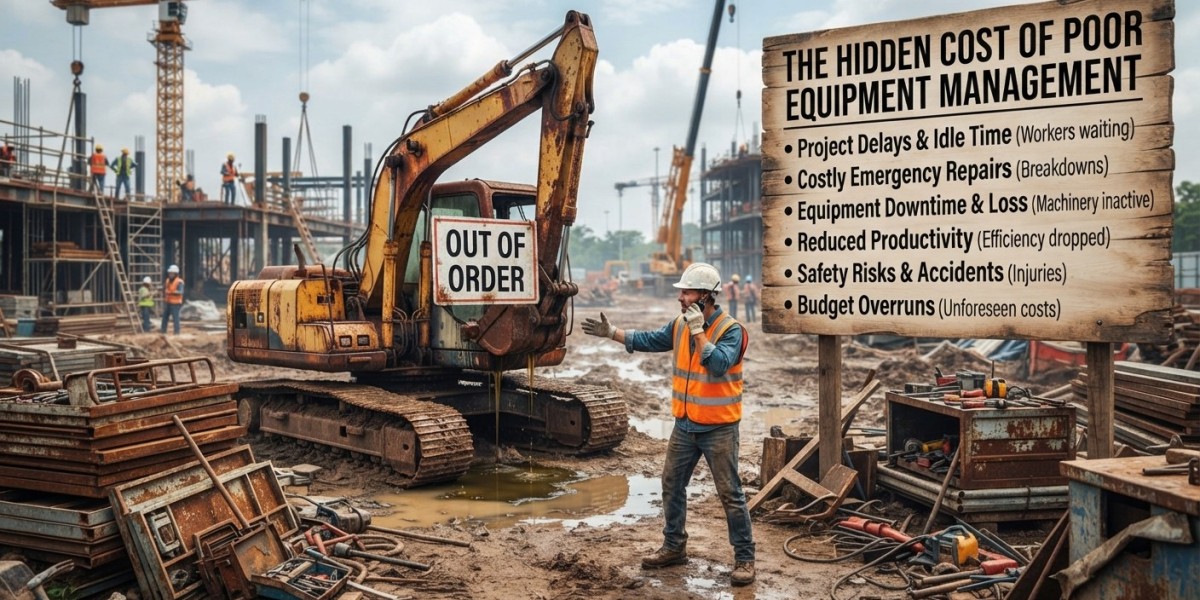

Construction equipment represents a major investment, but the cost of owning equipment goes beyond the initial purchase. Contractors also have to manage maintenance, operating hours, utilization, repairs, assignments, movement, and equipment availability throughout every project.
When these activities are not properly coordinated, small inefficiencies can become expensive operational problems. Equipment may sit idle while another project rents additional resources, maintenance may be delayed because service information is difficult to find, or an asset may be sent to a jobsite when it is not actually ready for work.
Construction equipment management software can help contractors bring equipment information, maintenance activities, utilization, assignments, and operational data into a more organized workflow. The goal is not simply to maintain an equipment list. It is to understand how every asset is being used and how it affects the work taking place on active jobsites.
What Poor Equipment Management Really Costs
Poor equipment management rarely creates just one problem.
A contractor may experience:
Unnecessary equipment downtime
Low equipment utilization
Delayed maintenance
Duplicate rentals
Unplanned repairs
Difficult equipment transfers
Higher operating costs
Limited visibility across jobsites
Each issue can affect another part of the operation.
For example, an equipment breakdown may stop a field activity. The contractor may then need to rent replacement equipment, reschedule workers, and adjust the project schedule. The original maintenance issue can therefore create several additional costs.
Equipment Visibility Starts With Accurate Information
Before contractors can improve equipment management, they need reliable information about their assets.
Useful equipment records can include:
Equipment identification
Current location
Current status
Jobsite assignment
Operating hours
Utilization
Maintenance status
Open work orders
Repair history
Associated costs
Having these details together provides a more complete view of equipment operations.
A basic spreadsheet may show where an asset was assigned, but it may not show whether that equipment is currently operating, down, under maintenance, or available for another job.
Understand Equipment Status
Equipment status can change throughout the day.
An asset may be:
Working
Available
Idle
Assigned
Down
Under repair
Awaiting parts
In transit
Accurate status information helps operations teams make better decisions.
For example, an excavator may appear available because it has completed an assignment. However, if it has an open maintenance issue, sending it to another jobsite may create another problem.
Knowing the operational status before making an assignment helps prevent avoidable disruptions.
Monitor Equipment Hours and Utilization
Equipment hours can provide important information about how assets are being used.
One piece of equipment may operate for long hours every day while another remains idle for extended periods.
Monitoring utilization can help contractors identify:
Underused equipment
High-demand assets
Long idle periods
Equipment frequently moved between jobs
Assets approaching service requirements
This type of visibility can help contractors understand whether their equipment resources are actually supporting project requirements.
Connect Equipment Management With Maintenance
Maintenance should not operate separately from equipment operations.
When equipment records and maintenance information are disconnected, operations teams may not know that an asset has an overdue service, active work order, fault, or recurring problem.
A coordinated workflow can connect:
Preventive maintenance
Work orders
Inspections
Fault alerts
Service history
Equipment status
This gives maintenance and operations teams a clearer understanding of equipment readiness.
Reduce Unnecessary Equipment Rentals
Rental equipment can be useful when internal resources are unavailable or demand temporarily increases.
The problem occurs when contractors rent equipment without having a clear view of what their existing fleet can provide.
Before arranging a rental, teams should consider:
Equipment currently available
Equipment becoming available soon
Utilization across projects
Current maintenance status
Transfer requirements
Rental duration and cost
Better visibility can help contractors compare internal resources with rental options before making a decision.
Improve Equipment Allocation
Equipment allocation should reflect actual project requirements.
When several jobsites need similar resources, operations teams need to understand:
Which project has the highest demand
Which assets are currently underused
When equipment will become available
Whether an asset is ready to move
What transportation is required
A centralized operational view can make these decisions easier.
Manage Equipment Transfers More Effectively
Moving equipment between jobsites requires coordination.
A transfer may involve the requesting project, dispatch, the current jobsite, transportation, maintenance, and the receiving team.
If each group maintains different information, simple transfers can create unnecessary communication.
A connected equipment workflow can provide a clearer view of the asset's current status, assignment, location, and readiness before it is moved.
Bring Field Information Into Equipment Operations
Equipment management is not only an office function.
Field teams are often the first to identify equipment issues. Operators may notice unusual performance, supervisors may identify changing equipment requirements, and field personnel may need to complete inspections or submit work orders.
A field workflow allows this information to become part of the equipment record instead of remaining in informal messages or paperwork.
Use Equipment Data for Better Decisions
Equipment data can support decisions well beyond daily scheduling.
Over time, contractors can identify:
Equipment with recurring downtime
Assets with low utilization
High maintenance costs
Equipment frequently requested across projects
Excessive rental dependence
Assets approaching replacement decisions
This creates an opportunity to move from reactive equipment management toward more informed planning.
Connect Equipment Costs With Operations
Equipment performance should also be considered financially.
Operating costs, maintenance costs, rental costs, and jobsite utilization can provide a clearer picture of how each asset contributes to project performance.
This can help contractors determine whether an asset should be reassigned, maintained, rented less frequently, or evaluated for replacement.
Create One Shared View Across Teams
Equipment information can become fragmented between maintenance, dispatch, field teams, finance, and operations.
When each group has a different version of the data, decisions become slower and less reliable.
A shared equipment view allows teams to work from the same operational information.
Conclusion
The hidden cost of poor equipment management is not limited to equipment that breaks down. It can appear through idle resources, unnecessary rentals, delayed maintenance, inefficient transfers, poor utilization, and incomplete information.
Better equipment management starts with visibility. Contractors need to know where equipment is, what it is doing, how many hours it has operated, what maintenance it requires, and when it will become available.
Construction equipment management software can support this approach by connecting equipment records with maintenance, utilization, field activity, dispatch, and operational information.
With better visibility and more connected workflows, contractors can make more informed equipment decisions, reduce avoidable costs, and keep construction-site operations running more efficiently.