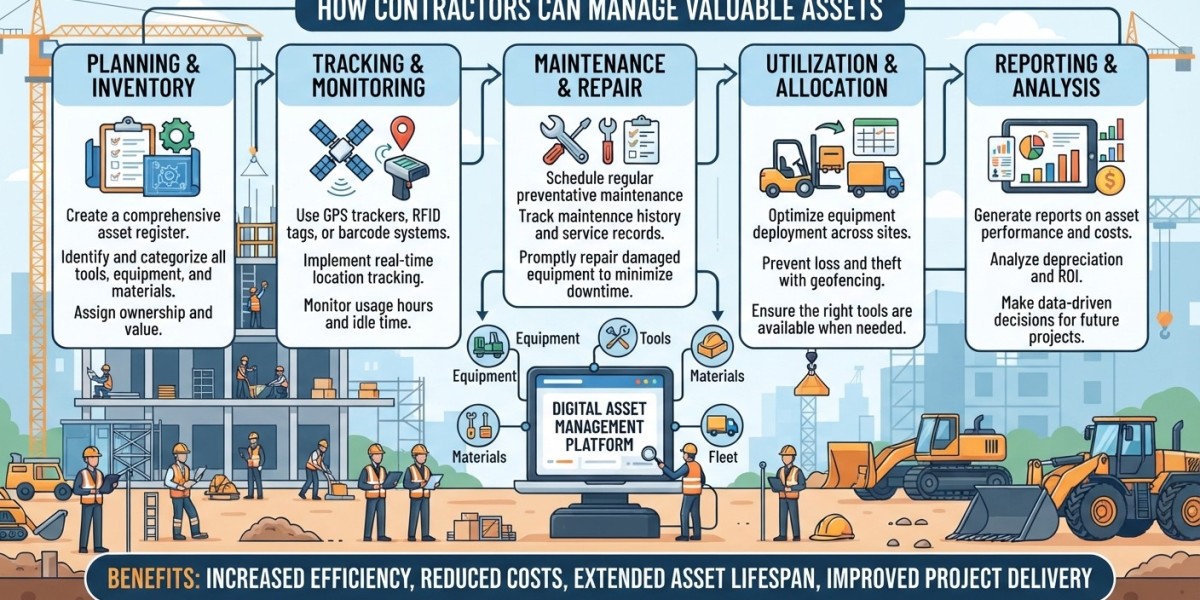

Construction equipment operates under demanding conditions, often for long hours and across multiple active jobsites. Excavators, loaders, dozers, compactors, trucks, and other equipment support daily production, so an unexpected breakdown can affect crews, schedules, and project costs.
For contractors managing a large equipment operation, Construction equipment maintenance software can help organize preventive maintenance, inspections, work orders, service history, equipment hours, and repair requirements. Instead of relying on separate spreadsheets, paper records, or manual reminders, maintenance teams can build a more consistent process around the actual condition and usage of each asset.
Why Staying Ahead of Maintenance Matters
Maintenance becomes difficult when teams only react after equipment develops a serious problem.
A reactive approach can lead to:
Unexpected downtime
Disrupted jobsite activities
Emergency repairs
Higher parts and labor costs
Delayed equipment assignments
Unplanned rentals
Pressure on maintenance teams
A proactive process helps contractors identify upcoming requirements before they become operational problems.
Track Equipment Hours
Construction equipment maintenance is often based on operating hours rather than simply calendar dates. Two similar pieces of equipment may have completely different service requirements because one is operating heavily while the other is rarely used.
Tracking equipment hours helps maintenance teams identify when an asset is approaching an inspection or service interval.
This information can also help operations teams understand whether equipment is being used efficiently.
Build Preventive Maintenance Schedules
Preventive maintenance should be planned around manufacturer recommendations, operating hours, equipment condition, and actual project requirements.
Scheduled activities may include:
Oil and filter service
Lubrication
Hydraulic inspections
Brake checks
Cooling-system inspections
Tire or track inspections
Battery checks
Safety inspections
Planning these tasks ahead of time allows maintenance teams to schedule work before the equipment becomes unavailable unexpectedly.
Connect Maintenance With Current Equipment Status
A service schedule is more useful when it is connected to the current status of the equipment.
An asset may be:
Operating
Available
Idle
Down
Under repair
Awaiting parts
Scheduled for service
Knowing the status helps maintenance and operations teams coordinate decisions.
For example, equipment that is scheduled for preventive maintenance should not be committed to a critical upcoming activity without considering the service requirement.
Use Inspections to Identify Issues Early
Operators and field personnel often notice equipment problems before a major failure occurs.
Regular inspections can identify:
Fluid leaks
Unusual noises
Warning indicators
Damaged components
Hydraulic problems
Tire or track concerns
Attachment issues
Inspection findings should be recorded and connected to the appropriate equipment record so maintenance teams can prioritize action.
Manage Work Orders Clearly
Work orders provide a structured way to manage maintenance requirements.
A work order can identify:
Equipment
Reported issue
Required work
Priority
Assigned technician
Parts needed
Completion status
Repair history
This gives maintenance teams a clearer view of open work and helps prevent important repairs from being forgotten.
Prioritize Critical Maintenance
Not every maintenance requirement has the same urgency.
Critical issues may require immediate attention, while routine service can often be scheduled around jobsite demand.
A practical maintenance workflow can separate:
Critical Repairs
Issues that affect safe operation or prevent equipment from working.
Preventive Service
Planned maintenance designed to reduce the risk of future failures.
Corrective Repairs
Problems identified through inspections, fault alerts, or operator reports.
Routine Inspections
Regular checks used to monitor equipment condition.
Clear prioritization helps maintenance teams focus their resources effectively.
Connect Maintenance With Jobsite Schedules
Equipment maintenance cannot be planned in isolation from construction operations.
Before taking an asset out of service, teams should understand:
Current job assignment
Upcoming work
Expected maintenance duration
Equipment demand
Available alternatives
Project milestones
This allows maintenance to be scheduled at a time that minimizes disruption.
Monitor Faults and Recurring Problems
Repeated problems can be a sign that an equipment item requires deeper attention.
For example, if the same hydraulic issue appears repeatedly, continuously completing minor repairs may not address the underlying cause.
A complete service history makes recurring problems easier to identify.
This can support decisions about additional inspection, component replacement, overhaul, or eventual equipment replacement.
Keep Parts and Inventory Connected
Maintenance delays can occur when the required parts are not available.
Keeping information about parts requirements connected to work orders can help maintenance teams prepare for scheduled repairs.
Useful information can include:
Parts required
Current inventory
Purchase orders
Outstanding parts
Expected delivery
Equipment associated with the repair
Better parts visibility can help reduce avoidable waiting time.
Use Field Information Immediately
Maintenance teams depend on accurate information from the field.
Operators and supervisors may need to report issues, complete inspections, submit work orders, or record equipment information directly from the jobsite.
A field workflow can reduce the delay between discovering an issue and getting it into the maintenance process.
Clue currently positions its field workflow around work orders, inspections, and time tracking from job sites, while connecting that information with broader equipment operations.
Combine Maintenance With Equipment Utilization
Maintenance data becomes even more useful when combined with utilization information.
Contractors can see which assets are working heavily and which remain idle.
An asset with low utilization but increasing maintenance costs may require a different operational decision than one that is heavily used and consistently productive.
This broader view helps contractors make better maintenance and fleet decisions.
Use Predictive Information Where Available
Modern equipment operations can also incorporate fault alerts and predictive insights.
Instead of waiting for a failure, teams can review equipment risk indicators, recurring faults, operating patterns, and service history to identify assets that may require closer attention.
This can help maintenance teams prioritize their workload based on risk and operational impact.
Create One Source of Maintenance Information
Maintenance information is often spread across multiple systems.
One record may exist in a spreadsheet, another in a work-order system, while equipment hours and field inspections are stored elsewhere.
Bringing these details together creates a clearer view of equipment condition.
A connected approach can help maintenance, operations, dispatch, and field teams work from the same equipment information. Clue describes this model as a shared source of data across maintenance, dispatch, field, finance, and operations.
Use Maintenance Data for Long-Term Decisions
Maintenance history can support more than daily service scheduling.
Contractors can use it to evaluate:
Repair frequency
Downtime
Maintenance costs
Equipment utilization
Repeat faults
Service history
This can help determine whether an asset should continue operating, be reassigned, receive additional investment, or eventually be replaced.
Conclusion
Staying ahead of equipment maintenance requires more than remembering service dates. Contractors need visibility into operating hours, inspections, work orders, equipment condition, fault information, repair history, parts, utilization, and upcoming jobsite requirements.
A proactive approach can reduce unexpected downtime while helping maintenance teams plan their work more effectively.
Construction equipment maintenance software can support this process by bringing preventive maintenance, work orders, inspections, service history, and equipment information into a connected workflow. With better visibility and earlier action, contractors can keep equipment ready for the next job and make more informed maintenance decisions.