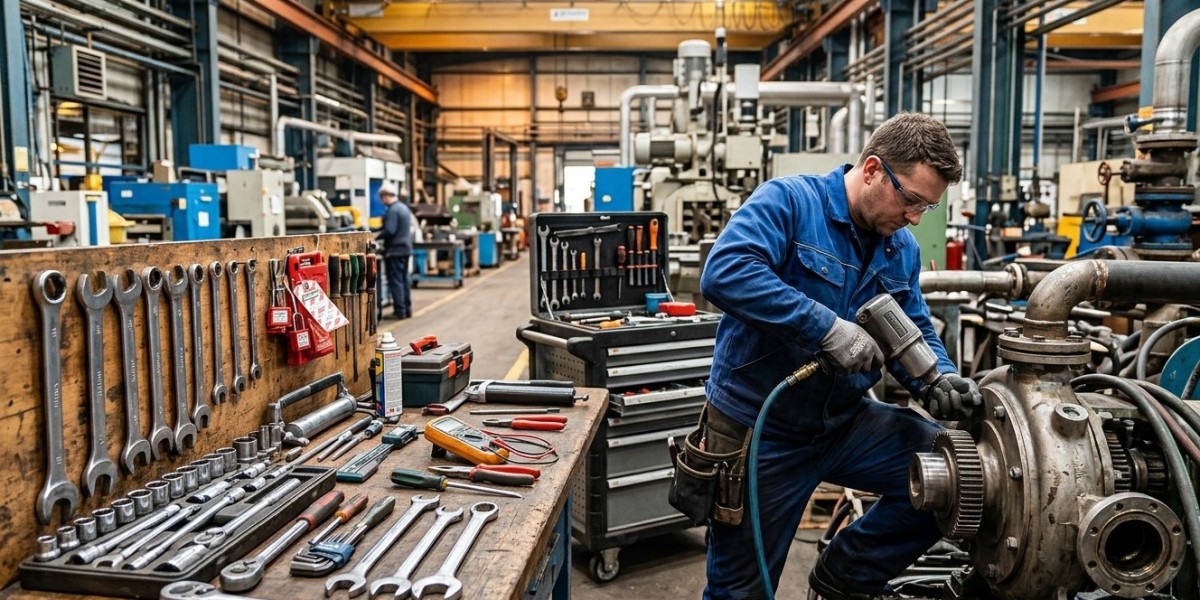

Industrial plants depend on reliable equipment, machinery, and production systems to maintain continuous operations. Regular maintenance is essential for reducing unexpected breakdowns, improving equipment performance, and extending the service life of valuable machinery. Having the right maintenance equipment can make these tasks faster, safer, and more effective. Khokhawala Trading LLC, an Industrial Tools Supplier in Dubai, provides a wide range of industrial and engineering tools that can support maintenance teams across manufacturing, engineering, fabrication, and other industrial environments.
From hand tools and hydraulic equipment to torque wrenches, precision measuring instruments, cutting tools, and workshop accessories, the right equipment helps maintenance professionals diagnose problems, perform repairs, and keep machinery operating efficiently. This guide explores the essential industrial maintenance tools every plant should consider and explains how proper tool selection can improve maintenance operations.
Why Industrial Maintenance Tools Are Important
Industrial machinery operates under demanding conditions. Continuous production, vibration, heat, pressure, friction, and heavy loads can gradually cause components to wear or become misaligned. Without proper maintenance, small problems can develop into serious equipment failures.
Industrial maintenance tools help technicians perform preventive and corrective maintenance efficiently. They can be used for tightening, loosening, measuring, cutting, aligning, repairing, assembling, and inspecting machine components.
The right tools can help plants:
- Reduce unexpected equipment downtime
- Improve maintenance efficiency
- Increase equipment reliability
- Support accurate repairs and adjustments
- Improve workplace safety
- Extend machinery service life
- Reduce long-term maintenance costs
A properly equipped maintenance department is therefore an important part of an efficient industrial operation.
1. Industrial Hand Tools
Hand tools are among the most frequently used items in plant maintenance. They are required for routine inspection, installation, adjustment, disassembly, and repair work.
Common industrial hand tools include:
- Spanners and wrenches
- Screwdrivers
- Pliers
- Hammers
- Hex keys
- Adjustable wrenches
- Files
- Cutters
- Pry bars
- Socket sets
Industrial hand tools should be selected according to the application and working environment. Heavy-duty tools are particularly important for industrial maintenance because technicians may work on large machinery, fasteners, pumps, motors, valves, and structural components.
High-quality hand tools can provide better grip, durability, and resistance to repeated use.
2. Torque Wrenches
Correct tightening is critical when maintaining industrial machinery. Fasteners that are too loose may cause vibration, movement, or component failure, while excessive tightening can damage threads, bolts, or machine components.
A torque wrench allows technicians to apply a controlled amount of torque according to the equipment manufacturer's specifications.
Torque wrenches are especially useful for:
- Machinery assembly
- Flange connections
- Automotive and industrial equipment
- Pumps and motors
- Hydraulic systems
- Critical bolted connections
- Preventive maintenance
Using calibrated torque wrenches can improve consistency and reduce the risk of incorrect fastening.
3. Precision Measuring Tools
Measurement is an essential part of industrial maintenance. Technicians often need to determine whether components remain within acceptable dimensions or whether wear has reached a critical level.
Common precision measuring instruments include:
- Vernier calipers
- Micrometers
- Dial indicators
- Height gauges
- Depth gauges
- Feeler gauges
- Measuring tapes
- Thickness gauges
Precision measuring tools can help maintenance teams identify dimensional changes, alignment problems, gaps, and component wear.
For example, a micrometer may be used to measure shaft diameter, while a feeler gauge can help determine the clearance between machine components. Accurate measurements allow technicians to make informed decisions about repair or replacement.
4. Hydraulic Maintenance Tools
Hydraulic equipment is widely used in industrial plants for lifting, pulling, pressing, positioning, and heavy-duty maintenance operations.
Essential hydraulic maintenance tools can include:
- Hydraulic jacks
- Hydraulic pullers
- Hydraulic pumps
- Hydraulic cylinders
- Hydraulic torque tools
- Hydraulic presses
These tools can significantly reduce the physical effort required for heavy maintenance work. They are particularly valuable when technicians need to remove bearings, gears, pulleys, or other tightly fitted components.
When selecting hydraulic tools, users should consider load capacity, operating pressure, working space, compatibility, and manufacturer specifications.
5. Bearing and Pulling Tools
Bearings are critical components in motors, pumps, gearboxes, conveyors, and rotating machinery. Removing and installing bearings incorrectly can damage shafts, housings, or the bearings themselves.
Bearing pullers and mechanical or hydraulic pullers are designed to assist with component removal.
They can be used for:
- Bearing removal
- Gear removal
- Pulley removal
- Bush removal
- Coupling removal
- Other press-fit components
Using the appropriate pulling tool can make maintenance work safer and reduce the possibility of damaging surrounding components.
6. Cutting and Deburring Tools
Maintenance work often requires technicians to cut metal, remove damaged sections, modify components, or clean sharp edges.
Industrial cutting tools can include:
- Hacksaws
- Industrial blades
- Cut-off tools
- Carbide cutting tools
- Drill bits
- Reamers
- Files
- Deburring tools
Deburring tools are particularly useful after machining, drilling, or cutting operations. Removing sharp edges can improve component fit, reduce handling hazards, and prepare surfaces for assembly.
The correct tool should always be selected according to the material, thickness, cutting method, and required finish.
7. Threading and Tapping Tools
Damaged or worn threads are common maintenance problems. Threading tools allow technicians to repair, restore, or create internal and external threads.
Common threading and tapping tools include:
- Hand taps
- Machine taps
- Dies
- Thread chasers
- Threading tools
- Thread gauges
These tools can be used during machinery repair, fabrication, equipment installation, and component restoration.
Selecting the correct thread size and tool material is important for producing accurate threads and avoiding unnecessary damage to the workpiece.
8. Grinding and Surface Preparation Tools
Grinding tools are useful for maintenance activities involving surface preparation, material removal, weld finishing, and component restoration.
Industrial grinding solutions may include:
- Grinding wheels
- Abrasive discs
- Mounted points
- Bench grinding tools
- Surface finishing tools
Grinding can help remove rust, excess material, weld irregularities, and damaged surface areas. However, technicians should use the correct abrasive and operating speed for the application.
Proper guards, personal protective equipment, and safe operating procedures are also essential when using grinding equipment.
9. Pipe Cutting and Bending Tools
Many industrial plants use pipelines for water, air, chemicals, fuel, hydraulic fluids, and other services. Maintenance teams therefore need suitable pipe cutting and bending tools.
Pipe tools may include:
- Pipe cutters
- Tube cutters
- Pipe benders
- Manual bending tools
- Hydraulic pipe bending equipment
The correct tool depends on pipe material, diameter, wall thickness, bending radius, and the required application.
Using suitable equipment helps produce cleaner cuts and controlled bends while reducing the risk of deformation.
10. Non-Sparking Tools for Specialized Environments
Certain industrial facilities may handle flammable materials or operate in environments where ignition risks must be carefully controlled. In such situations, specialized non-sparking tools may be required as part of the site's safety procedures.
Non-sparking tools can include:
- Spanners
- Wrenches
- Pliers
- Hammers
- Screwdrivers
- Other hand tools
It is important to understand that "non-sparking" does not mean a tool can never generate a spark under every circumstance. Tool selection should always follow the facility's risk assessment, hazardous-area requirements, and safety procedures.
11. Tool Storage and Organization
Having high-quality maintenance tools is only part of an effective maintenance system. Tools should also be stored properly and kept organized.
Tool cabinets, storage boxes, racks, and shadow boards can help technicians quickly identify and access equipment.
Good organization can:
- Reduce time spent searching for tools
- Prevent tools from being misplaced
- Protect tools from contamination and damage
- Improve workplace safety
- Make tool inspections easier
- Support better inventory control
Maintenance departments should establish designated storage locations for frequently used equipment.
12. Tool Inspection and Preventive Maintenance
Maintenance tools themselves require maintenance. Damaged, worn, contaminated, or improperly calibrated tools can create safety risks and produce inaccurate results.
Before use, technicians should inspect tools for:
- Cracks or deformation
- Excessive wear
- Corrosion
- Damaged handles
- Broken cutting edges
- Hydraulic leaks
- Loose components
- Calibration requirements
- Missing safety guards
Precision instruments and torque wrenches should be checked according to appropriate calibration schedules.
Regular inspection helps ensure that tools remain reliable when they are needed most.
How to Select the Right Industrial Maintenance Tools
Choosing maintenance equipment should be based on actual plant requirements rather than simply purchasing the largest or most expensive tools.
Consider the following factors:
Application
Determine what type of maintenance work the tool will perform. A tool designed for light assembly may not be suitable for heavy industrial repairs.
Material
Consider whether technicians will work with steel, stainless steel, aluminum, plastics, composites, or other materials.
Load and Capacity
Hydraulic tools, pullers, jacks, and lifting equipment must have suitable capacity for the intended application.
Accuracy
For inspection and measurement tasks, select precision instruments with the required measurement range and accuracy.
Durability
Maintenance tools may be used frequently and under demanding conditions. Durable construction can help reduce replacement frequency.
Safety
Consider workplace hazards, operating conditions, ergonomics, and any specialized requirements such as non-sparking equipment.
Compatibility
Make sure accessories, replacement parts, attachments, and consumables are compatible with the selected tools and machinery.
Benefits of Using Quality Industrial Maintenance Tools
Investing in suitable maintenance equipment can provide long-term operational benefits.
Reduced Downtime
Efficient tools help technicians complete repair and maintenance tasks more quickly, reducing the duration of equipment shutdowns.
Improved Repair Quality
Precision instruments and application-specific tools can improve the accuracy and consistency of maintenance work.
Better Worker Safety
Proper tools reduce the need for improvised methods that may expose workers to unnecessary risks.
Longer Equipment Life
Correct maintenance can reduce excessive wear and help machinery remain operational for longer periods.
Lower Maintenance Costs
Preventive maintenance supported by appropriate tools can help identify problems before they develop into expensive failures.
Industrial Maintenance Tool Checklist
A basic plant maintenance department may consider maintaining the following equipment:
- Industrial hand tools
- Socket and wrench sets
- Torque wrenches
- Precision measuring instruments
- Hydraulic tools
- Bearing pullers
- Cutting tools
- Deburring tools
- Threading and tapping tools
- Grinding tools
- Pipe cutting and bending tools
- Files and abrasive tools
- Non-sparking tools where required
- Tool storage systems
- Calibration equipment and inspection accessories
The exact tool selection should be customized according to the machinery, processes, industry, and maintenance requirements of each facility.
Conclusion
Reliable plant maintenance depends on skilled technicians, effective procedures, and the right equipment. From industrial hand tools and torque wrenches to hydraulic tools, precision measuring instruments, cutting tools, threading tools, grinding solutions, and specialized maintenance equipment, every tool has an important role in keeping industrial machinery operating efficiently.
For businesses looking for dependable maintenance and engineering equipment, Khokhawala Trading LLC, an Industrial Tools Supplier in Dubai, can be a valuable source for industrial tools and workshop solutions. Selecting the right tools, maintaining them properly, and using them according to manufacturer and workplace requirements can help improve maintenance efficiency, equipment reliability, workplace safety, and overall productivity.